
Event overview
In partnership with Japan Science and Technology Agency and chaired by Professor Maja Pantić FREng and Professor Tomohiro Shibata, the symposium took place at Miraikan National Museum of Emerging Science and Innovation. It combined keynote lectures, case studies, structured group activities and a participant pitching session over three days. An evening reception hosted by the British Embassy in Tokyo highlighted the diplomatic significance of the UK-Japan relationship in AI, with both countries' AI Safety Institutes having established ongoing and active collaboration on shared standards and governance.

Participants came from the UK, Japan, Kenya, Nigeria, Nepal, Malaysia, the Philippines, Argentina, Peru, Colombia, Jordan, India, South Africa, Sweden, Hong Kong, China and beyond. Many are already working on responsible or sustainable AI in their own contexts, from flood management in Yorkshire to indigenous language recovery in Africa, and from autonomous vehicles in San Francisco to health AI governance in Kathmandu.
After each Frontiers symposium, we award seed funding grants of up to £20,000 to support collaborative projects that emerge from the event. Following this symposium, six projects were selected for funding – see for more information.
Discussion themes
This report summarises the key discussions and findings across the three days, with the following insights cutting across all sessions:
- The gap is implementation, not principles. Responsible AI frameworks are abundant. The tools to put them into practice in specific sectors and contexts, particularly in low- and middle-income countries, largely are not.
- Small models, big difference. The energy and infrastructure demands of current AI development are both environmentally unsustainable and structurally exclusionary. Smaller, task-specific models and new hardware approaches offer credible alternatives.
- AI is already working in places the mainstream debate ignores. AI deployments – from African language recovery to large-classroom personalisation in Nigeria and Kenya – are generating real gains. Yet they are also creating consent and data sovereignty risks that existing frameworks don’t yet address.
- The Global South is not waiting. Participants from low- and middle-income countries (LMICs) highlighted the argument that community-grounded, locally trained AI may produce the most useful tools for global challenges. This was one of the most consistent threads across all three days.
- Engineers need to be in the room. AI governance conversations are dominated by lawyers, policymakers and computer scientists. The engineering perspective – on what is actually buildable, deployable and maintainable – is consistently underrepresented.
Event chairs

Professor Maja Pantić FREng
NatWest Group and Imperial College London, UK
Professor Maja Pantić is the inaugural Chief AI Research Officer of NatWest Group and a Professor of AI at Imperial College London. Over a career spanning 25 years, she has worked on human behaviour analysis and synthesis, spending a decade in industry in companies including Meta, Samsung and NatWest. She has co-authored more than 500 papers, holds an h-index of 109, and is a Fellow of the Royal Academy of Engineering, IEEE and IAPR.
As co-chair, Professor Pantić brought deep technical knowledge of AI's trajectory alongside a clear-eyed view of its risks. Her opening remarks set the tone for the three days, tracing the history of AI development from the first neural networks to the present day and making the case for why responsible, sustainable AI cannot be achieved by any single discipline or any single country alone.
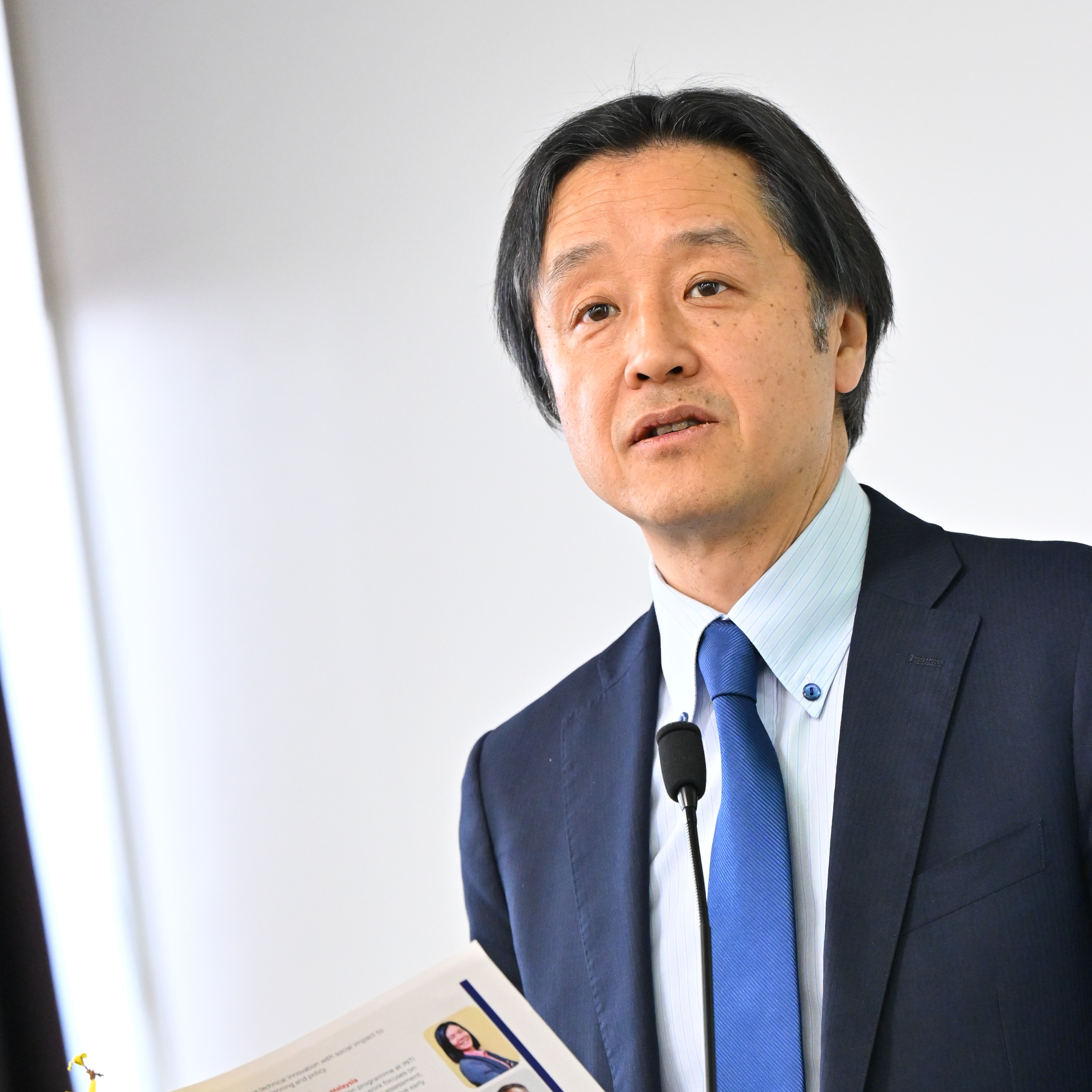
Professor Tomohiro Shibata
Kyushu Institute of Technology, Japan
Professor Tomohiro Shibata is based at the Kyushu Institute of Technology, where he leads interdisciplinary research bridging robotics, AI, neuroscience and welfare engineering. He manages the Smart Life Care Co-Creation Laboratory, which operates as a Living Lab under Japan's Ministry of Health, Labour and Welfare, supporting the development and deployment of care and rehabilitation technologies.
As co-chair, Professor Shibata brought a systems perspective on AI as a connector – of disciplines, cultures and real-world contexts – and played a central role in shaping the symposium's collaborative atmosphere and its focus on human-centred outcomes.
Sessions and speakers
Responsible AI
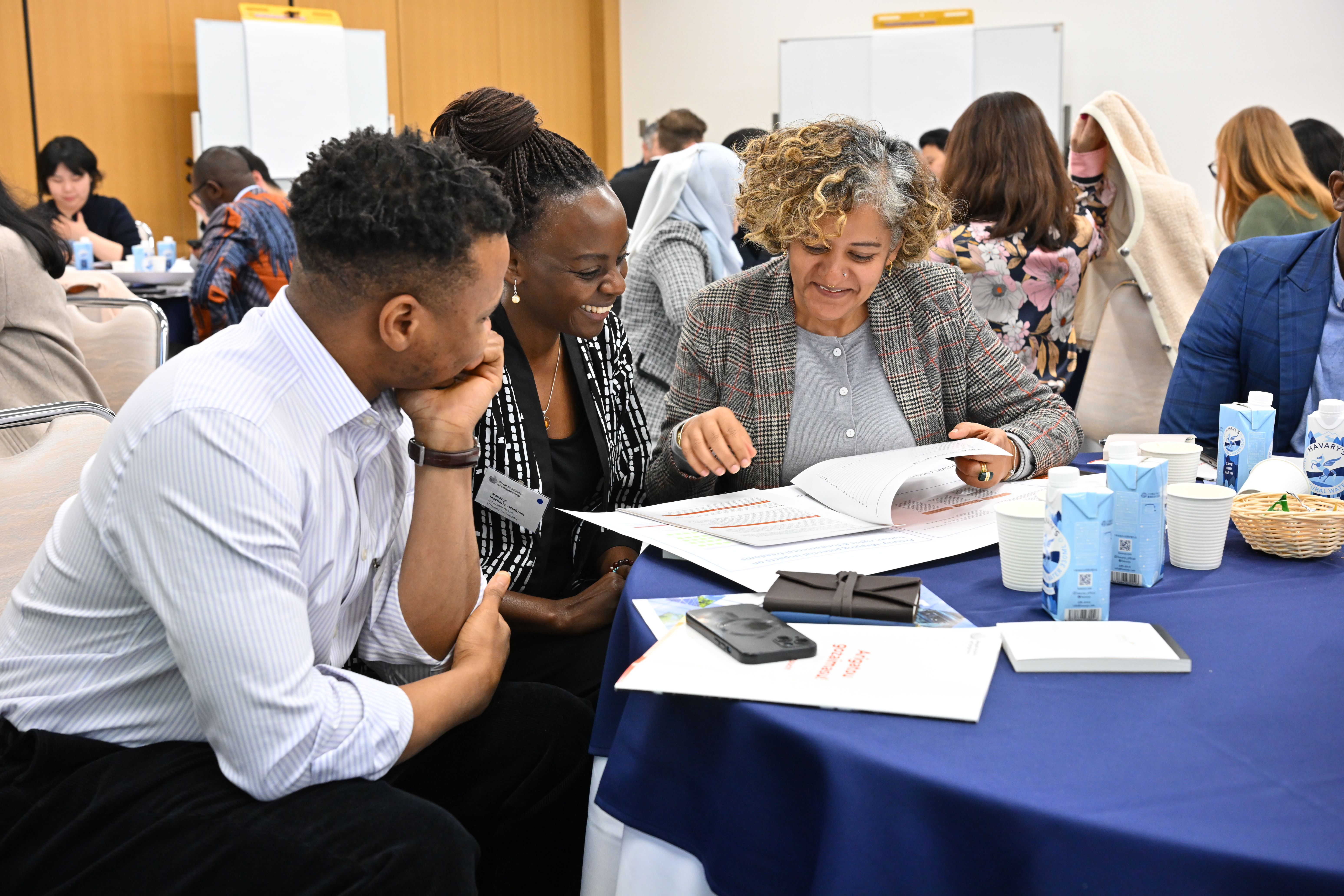
This session examined what responsible AI actually requires in practice, moving from principle to implementation across three complementary presentations. The big picture showed a field that knows what it needs to do but is struggling to do it. This is not for lack of frameworks, but for lack of sustained investment, sector-specific tools and culturally grounded processes that real implementation demands. A group activity using the Council of Europe's HUDARIA human rights impact assessment framework gave participants experience of what rigorous impact assessment requires in practice.
Key takeaways
- The gap between responsible AI principles and their implementation in practice is the defining challenge of the field. Frameworks exist, but sector-specific, locally validated tools largely don’t.
- AI risks are decision failures as much as technical ones. Systems fail when they are built around technology rather than the realities of communities and governance.
- Whose values are embedded in AI frameworks matters as much as whether frameworks exist. Inclusive dialogue is a requirement, not a nicety.
- Agentic AI requires governance mechanisms that don’t yet exist. The field needs to get ahead of this before deployment is widespread.
- Consent in a person's mother tongue isn’t informed consent if the implications have not been explained in the same language.
Presentations

Towards human-first and responsible innovation in physical AI: Insights from United Nations and JST Moonshot projects
Professor Toshie Takahashi
Professor Takahashi presented cross-cultural research on young people's attitudes to AI, drawn from the UN's A Future with AI project and Japan's JST Moonshot GenZAI programme, spanning eight countries including the UK, US, Japan, China and Chile. Her findings challenged one-size-fits-all thinking: for example, Japanese youth are significantly more accepting of AI in elder care than their UK or US counterparts, a direct reflection of Japan's aging population. Professor Takahashi also raised the emerging risks of agentic AI, citing concerns from Geoffrey Hinton and Yoshua Bengio about autonomous systems that may diverge from human values, arguing that governance needs to be built before these systems are deployed at scale.
Realising responsible AI by putting AI ethics and governance into practice: Notes from the field
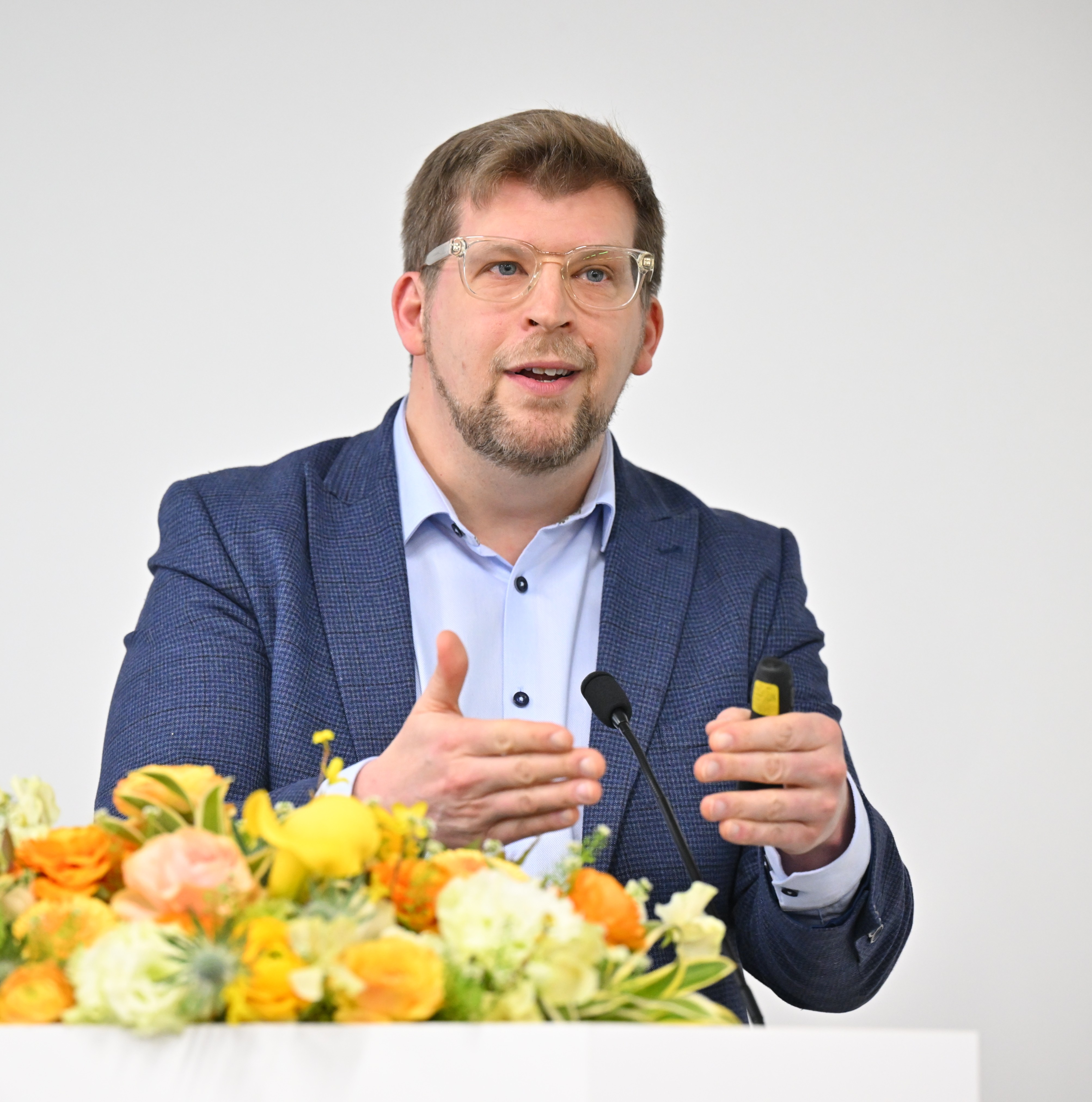
Professor David Leslie
Professor Leslie presented nearly a decade of fieldwork translating AI ethics into governance practice. This included the UK national guidance on AI ethics in the public sector – now the world's most-cited public sector AI ethics framework – and the Council of Europe's HUDARIA human rights impact assessment for AI, adopted in 2024. His central argument was that moving from principle to practice requires sustained, iterative investment – noting that the UK guidance took five years of fieldwork with the Ministry of Justice to develop. Professor Leslie also described the HUDARIA framework in more detail, as a structured methodology for assessing AI's impact on human rights, democracy and the rule of law. Adopted by the Council of Europe in 2024, participants heard how the framework represents one of the first binding international instruments on AI governance, moving impact assessment from a checklist exercise into a process of contextual interpretation and asking whether an AI system meaningfully protects the rights of the people it affects and not just if it complies with stated principles.
AI as decision partners: Building AI systems that communities can trust and use
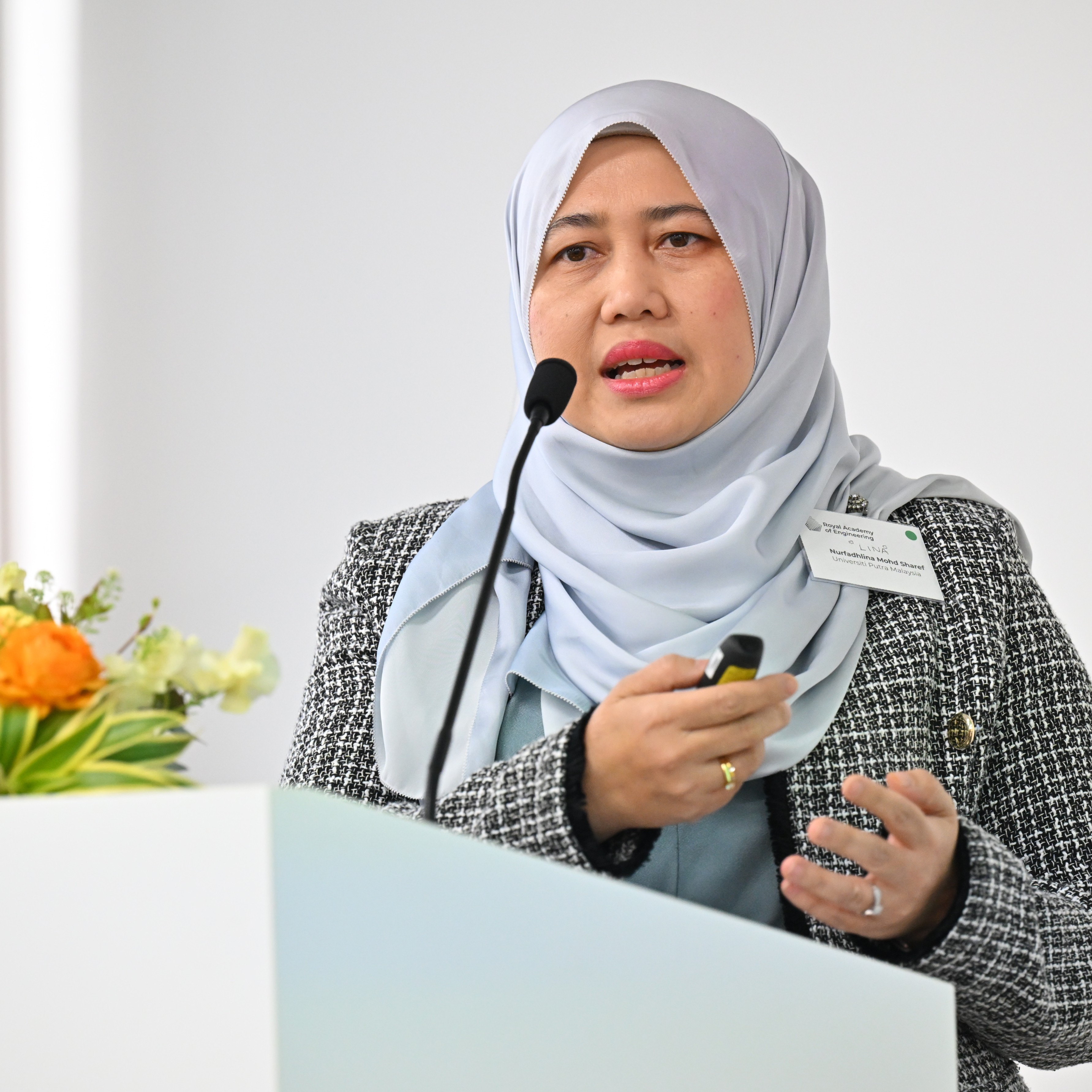
Professor Nurfadhlina Mohd Sharef
Professor Sharef drew from hands-on work across health, education, agriculture and environmental systems in Malaysia to argue that the field's problem is no longer the absence of principles, but the gap between policy and action. Frameworks developed in high-income settings consistently fail to transfer to ASEAN contexts, where sector-native validation tools are largely absent. Through examples, including an agriculture digital twin built in a local language to reduce context-insensitive decisions, a biodiversity management system for Malaysian forest reserves, and a clinical decision support tool evaluated with counsellors across 65 use cases, she demonstrated what AI as a decision partner looks like: systems designed for contestability and explainability from the start, where communities retain tangible agency.
Efficient and Sustainable AI
Through three different examples, this session made the case that the dominant model of AI development is neither inevitable, nor efficient. From task-specific AI models, trained on as little as a single image, that can produce tenfold improvements in data quality from standard laboratory microscopes, to an autonomous vehicle system built around strict compute and energy constraints, to neuromorphic chips that could deliver frontier-level compute from a device held in the palm of a hand, the presentations showed what AI development looks like when efficiency is treated as a core value rather than a secondary concern. A group activity then asked participants to think through the implications of dramatic improvements in scale, speed, sustainability, social responsibility and smart connectivity – the session's five organising themes.
Presentations

Lowering barriers to rich biological data with small, task-specific AI
Ivana Mikić
Ivana Mikić presented work at the intersection of AI and biology, showing how targeted, small, task-specific models can extract significantly richer biological content from data produced by standard laboratory microscopes – without the specialist hardware and workflows that typically cost hundreds of thousands of dollars. These models also reduce energy consumption significantly, making the approach viable for research settings with limited infrastructure. She also spoke to the broader opportunity in drug discovery. Here, AI is optimising specific steps in the pipeline – including work on molecules that cross the blood-brain barrier – with drugs now in clinical trials as a result, though these are partial rather than end-to-end AI discoveries. She argued this is a systems problem as much as a modelling one: the tools exist, but the data pipelines, laboratory workflows and institutional incentives that would allow them to be used at scale largely don’t. “Capabilities of modern AI systems far outpace most labs' ability to produce sufficient quantities of high-quality, relevant data.”
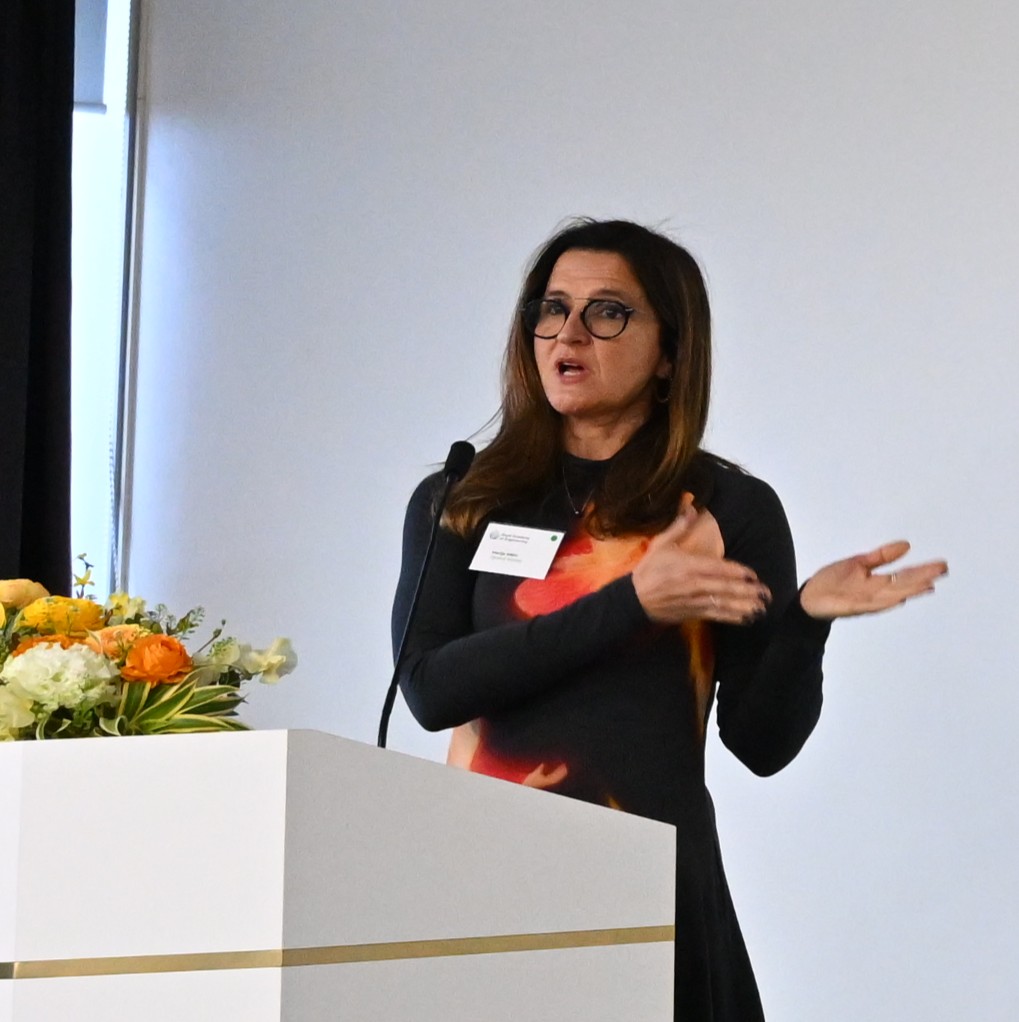
Efficiency by design: building scalable AI systems to power General Motors' autonomous vehicles
Marija Mikić
Marija Mikić described how General Motors is building the foundations for autonomous vehicles under conditions that make efficiency an existential principle. With over 15 sensors per vehicle generating continuous high-resolution data, strict latency requirements, limited onboard compute, and the cost of offloading data over cellular networks, every design decision must account for the full lifecycle from cloud training to on-vehicle inference. The talk was a useful corrective to the gap between AI's public narrative and its engineering reality. General autonomy, the ability to drive door-to-door under all conditions, remains genuinely hard, and the path there requires tight integration and cross-disciplinary collaboration across AI researchers, hardware engineers, and product teams. GM's planned launch of eyes-off highway autonomy in 2028 represents a near-term horizon for a technology that has been in iterative development and real-world testing for years, and points to the distance between a working prototype and a deployable, safe, scalable system.
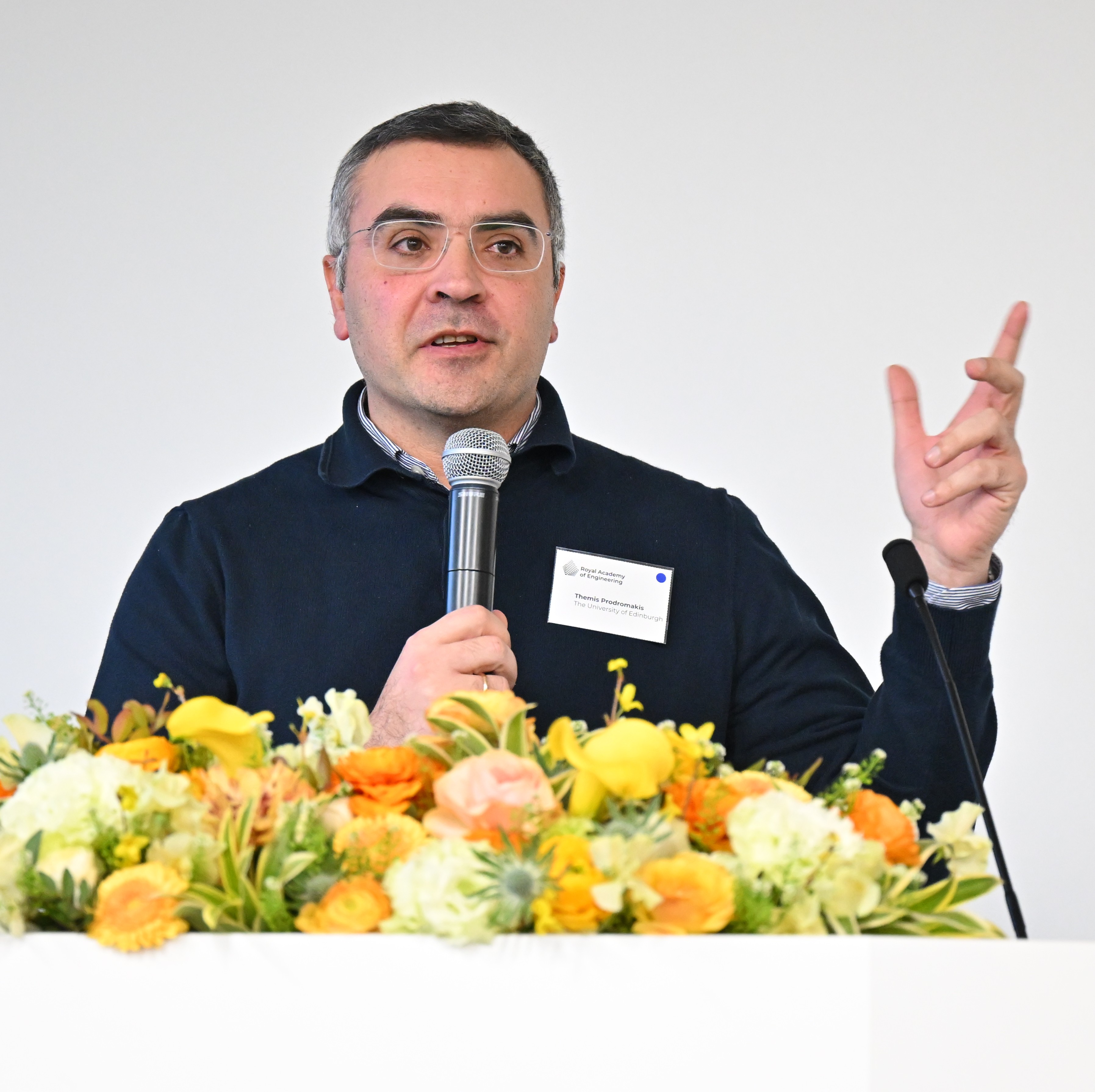
AI on (for) Chips
Professor Themis Prodromakis
Professor Prodromakis opened by assessing where AI hardware currently stands. Training a model at the scale of GPT-4 requires enough energy to power Edinburgh for two days, and data handling now accounts for over 20% of global energy demand. His group at the University of Edinburgh is developing neuromorphic computing, brain-inspired chip architectures using analogue rather than digital processing, as a credible alternative. Demonstrated efficiency gains of up to 1,000 times over conventional systems would, if realised at scale, allow the compute capacity of the world's largest supercomputer to fit into 5% of its current footprint. Foundries including Taiwan Semiconductor Manufacturing Company (TSMC) and Samsung are beginning to integrate these technologies. The implications for access are significant: edge devices running AI locally, without reliance on cloud infrastructure, could shift who gets to build and use AI in fundamental ways.
Education in the Age of AI
This session examined AI in education from three angles: the opportunity it presents for accessible and inclusive learning, the systemic conditions required for responsible deployment, and the value tensions that arise when different stakeholders define quality differently. Together, the presentations resisted easy optimism, acknowledging real gains while taking seriously the risks of dependency, deskilling and the displacement of the human relationships that make learning work. A group activity asked participants to compare what good AI-enabled education looks like from the perspectives of students, teachers and institutions – and to sit with the discomfort of finding no single answer.
Key takeaways:
- AI can deliver real learning gains in large, under-resourced classrooms, but only when the surrounding system is ready to absorb it. Technology alone doesn't change outcomes.
- Cognitive offloading is a documented risk: students who outsource thinking to AI rather than developing their own capabilities show measurable declines in independent performance.
- There is no shared definition of what good AI in education looks like across different contexts, stages of learning or cultural settings. This gap is widening as deployment accelerates.
Presentations
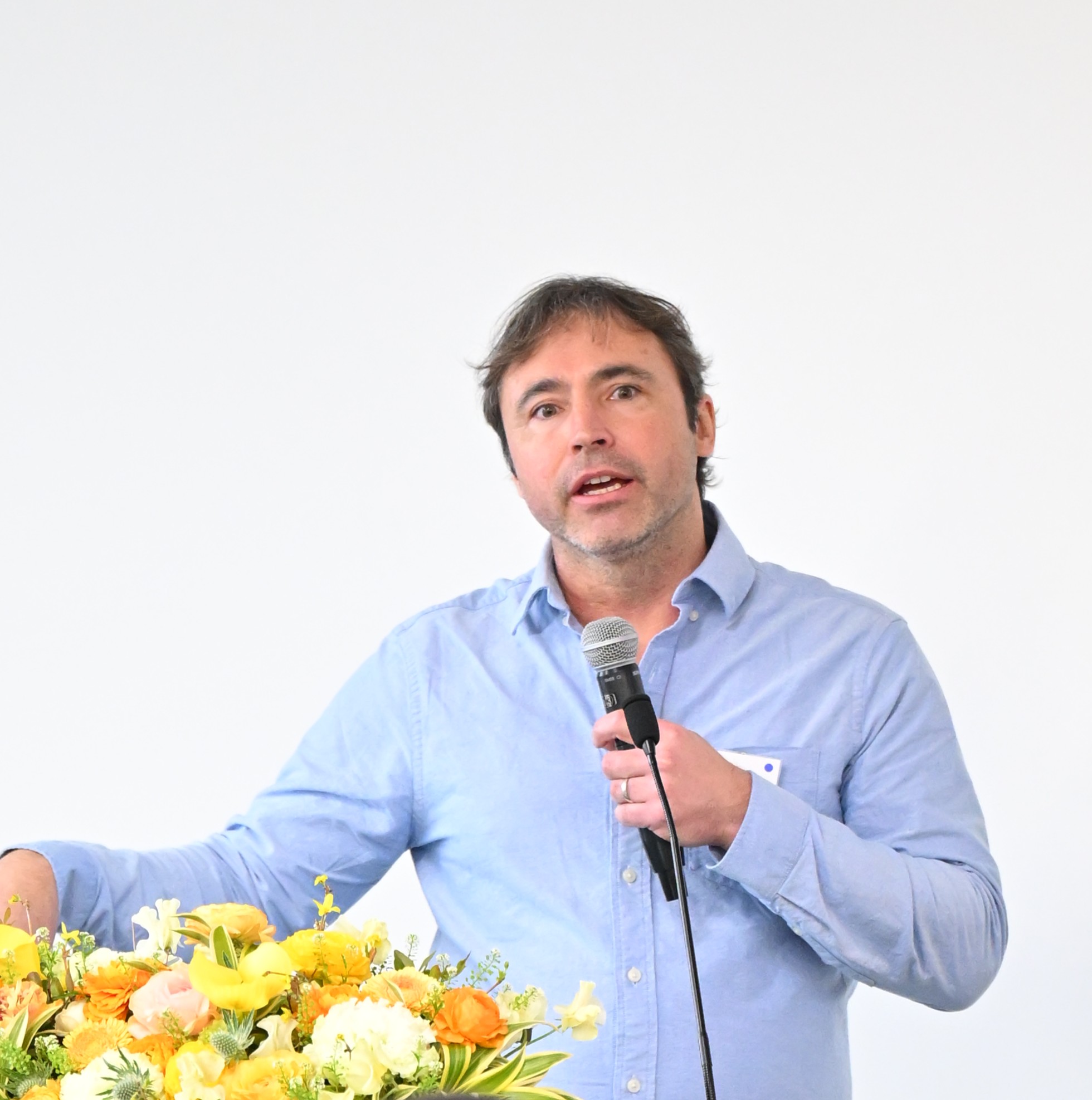
AI as a means and challenge to effective, accessible and empowered learning
Professor Tim Coughlan
Professor Coughlan drew on the Open University's experience teaching thousands of distributed students to examine what AI makes possible and what it puts at risk. He presented two projects. One was Taylor, a conversational AI assistant co-designed with disabled students to reduce the administrative burden of accessing support. The second was Ada, a platform that allows course teams to define the roles AI can play in student learning, from Socratic tutor to resource recommender, giving educators meaningful control over how AI shapes the experience. His research found that students value AI tools they perceive as trustworthy and institutionally grounded, and that some students are more willing to disclose sensitive information to an AI interface than to a human advisor. He was direct about the risks: generative AI tools can produce real learning gains, but they also enable cognitive offloading (students bypassing the effortful thinking that consolidates learning) and the evidence on long-term outcomes remains thin.

Preparing people, not just models: why responsible AI in education must start with systems
Ojoma Ochai
Ojoma Ochai brought a practitioner's perspective from CcHUB's work as an African innovation ecosystem enabler, where AI in education is both a sector-specific challenge and a foundational layer of learning infrastructure across health, creative industries and entrepreneurship. She presented deployments in Nigeria and Kenya showing that AI tools in classrooms with student-to-teacher ratios of 40 or 50 to one can deliver personalisation that is otherwise simply impossible. A lesson planning tool deployed in Nigeria allows teachers managing multiple science classes to generate and adapt materials in a fraction of the time. A system called Every Terms, used in Ogun State, tracks enrolment, attendance and learning outcomes at a scale no manual system could sustain. The central challenge isn’t whether AI works in a classroom, but whether the institutions, incentives and norms around it are ready. Where they are not, responsible use fails regardless of the quality of the tool.
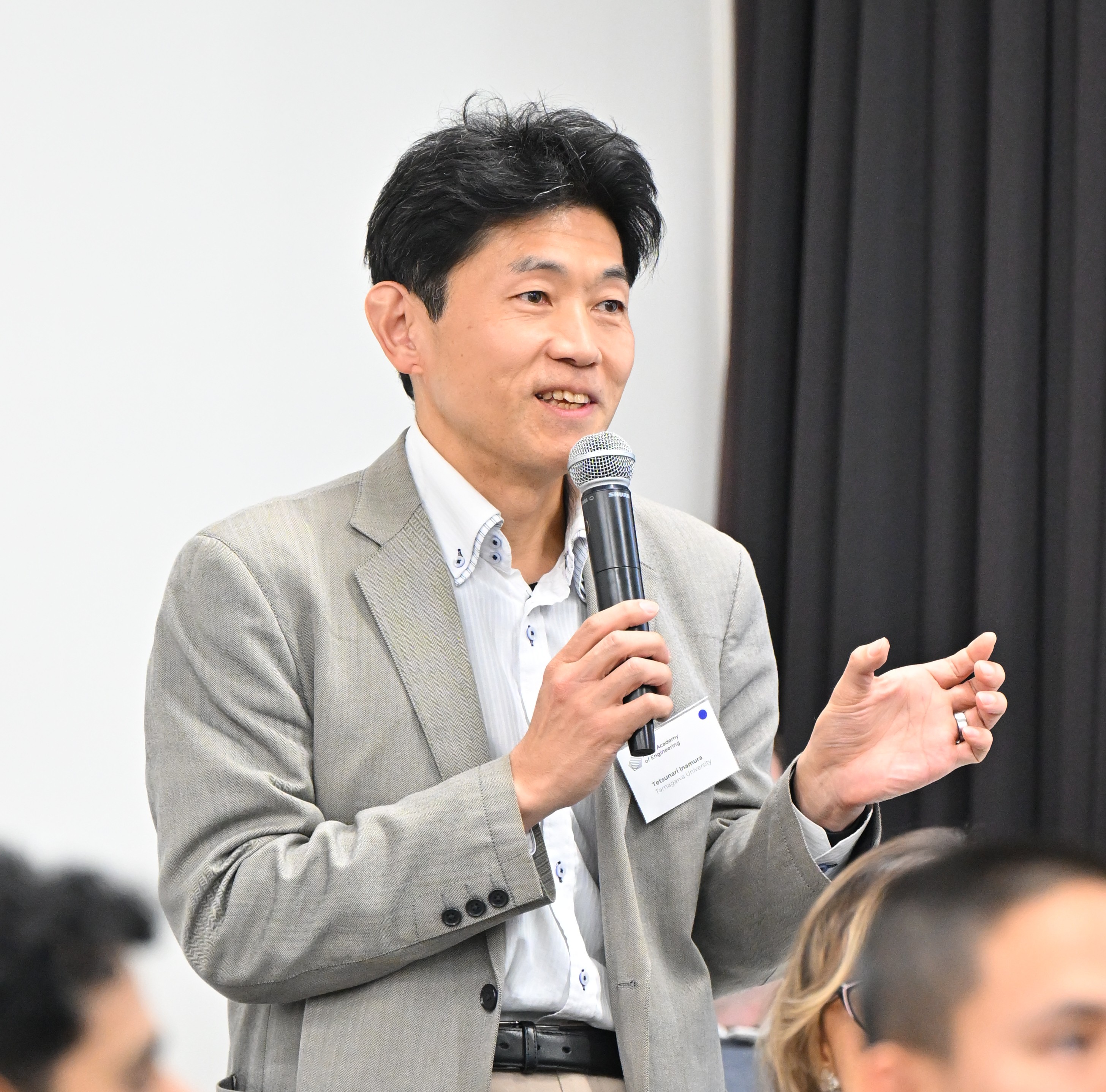
Designing AI for learning when values conflict: from cost-performance to self-efficacy and agency
Professor Tetsunari Inamura
Professor Inamura challenged the assumption that AI quality in education can be measured by a single metric. Drawing on research in human-robot interaction and educational AI, he proposed a perspective-aware evaluation framework that asks what good AI-enabled learning looks like from four different standpoints: the learner, the teacher, the institution and society.
These perspectives legitimately conflict. What a student experiences as good support, such as autonomy, confidence, and immediate feedback, may not align with what a teacher prioritises, such as fairness, accountability and workload. Institutions optimising for scalability, measurable outcomes, and cost-effectiveness may not serve either. And what society needs from education – critical thinking, civic participation, and adaptability – may be undermined by over-reliance on AI tools that do the hard cognitive work on behalf of learners.
Keynote Speakers
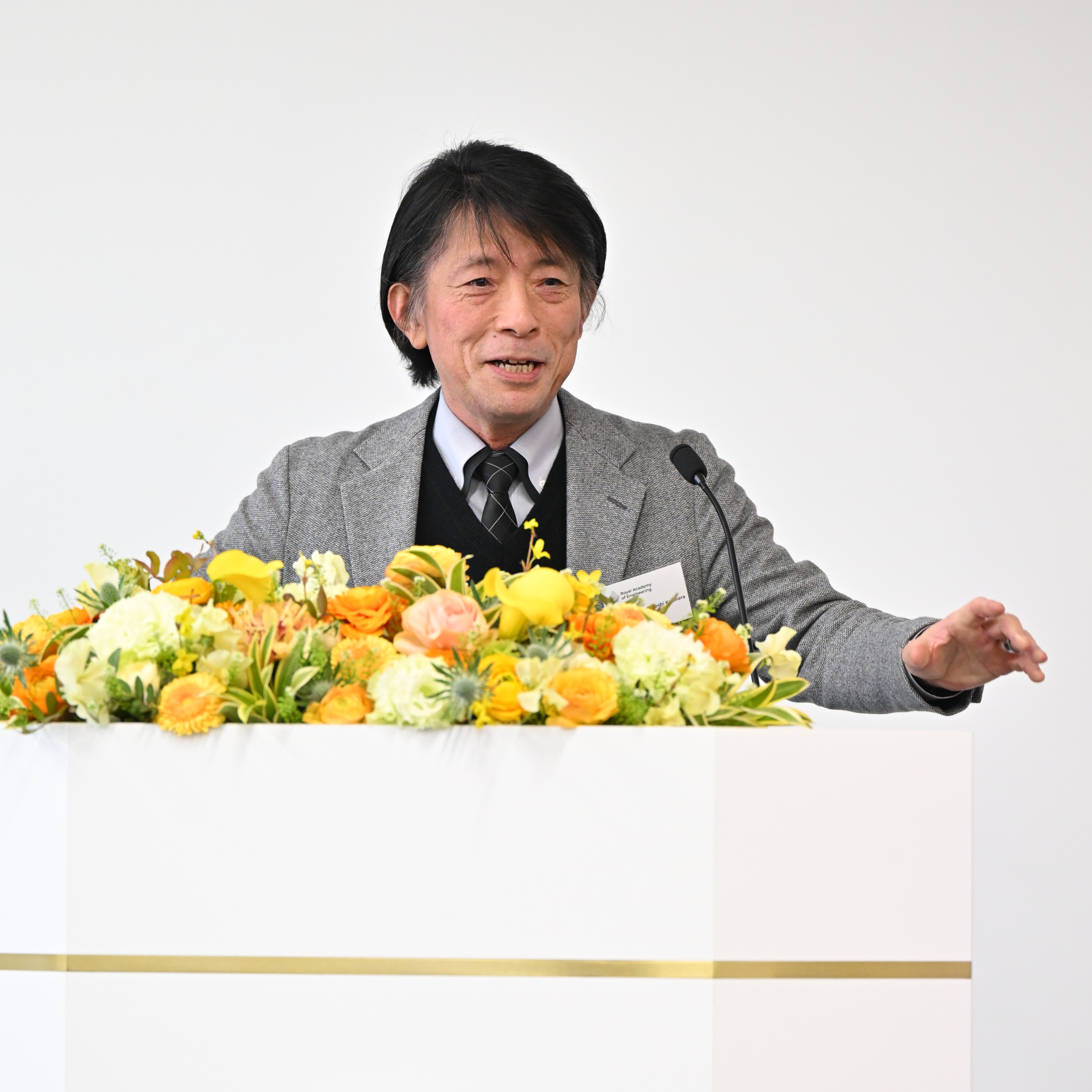
Professor Satoshi Kurihara - Keio University, Japan
Professor Kurihara, President of the Japanese Society for Artificial Intelligence and Director of the Centre for Advanced Research on Human-AI Symbiosis at Keio University, opened the symposium's first full day with a provocation. Efficiency, he argued, is not the same as innovation, and AI is currently being used almost entirely for the former.
Drawing on the history of AI development across three waves – from early rule-based systems through expert systems to the current deep-learning era – he traced how each wave failed not because the ideas were wrong but because the infrastructure was not ready. He noted that the current wave is different because it’s driven by the industry, not researchers; and its pace is shaped by commercial rather than scientific logic.
His central concern was that AI's extraordinary capacity for efficiency is being mistaken for a capacity for genuine innovation. True innovation – the kind that produces Nobel Prize-level discoveries – requires making unexpected connections across boundaries of knowledge, and that remains a distinctly human capability, for now. The next generation of AI, he argued, will need to go beyond responding to commands and begin to anticipate human intent, developing what he described as a sense of self-awareness.
He closed with a direct challenge to the room: researchers outside the US and China have a genuine opportunity to take a different approach - one grounded in human-AI symbiosis rather than the race to scale. "Can you take the first step?"

Wakanyi Macharia-Hoffman - Inclusive AI Lab, Utrecht University
Wakanyi Macharia-Hoffman closed the symposium with a keynote that asked a question few AI events make time for: what does it actually mean to be human, and what does that have to do with the tools we build?
Drawing on the Ubuntu philosophy – the African conception of personhood as relational, expressed in the idea that a person is a person through other people – she argued that most current AI development is built on a narrow and culturally specific model of what human intelligence and human flourishing look like. The normative assumptions embedded in systems built in Silicon Valley reflect a particular way of seeing the world, and that way of seeing is not universal.
Her practical proposal was grounded in her own work. The African Folktales Project, which she founded, uses storytelling-based curricula to bring Indigenous knowledge into schools across Africa, reaching teachers through a platform of 21,000 subscribers. She invited engineers in the room to help build a small AI system capable of amplifying that knowledge across the continent's 2,000-plus languages – not as a grand technological solution, but as a specific, community-grounded tool for a specific, community-defined purpose.
She closed the symposium by asking participants to put their hands on their hearts, close their eyes, and feel their own heartbeat. This was a reminder, she said, of something AI doesn't have and never will. “Let's be real,” she told them. “Let's be human together.”
Interested in the next Frontiers symposium?
Frontiers connects and empowers enthusiastic researchers, innovators and practitioners from the UK and around the world to work together on new ways to solve complex global challenges.
More Symposia reports
Browse resource libraryAgriculture, big data and the knowledge economy
The event brought together 66 early- to mid-career researchers to share ideas and discuss development challenges arou…
Empowering resilience: integrating innovation, sustainable communities, and climate adaptation strategies
Delegates from different disciplines and 19 countries came together to explore innovative climate adaptation approaches…
Systems approaches in a just energy transition for equitable access
Delegates from different disciplines and 23 countries came together to discuss how systems approaches can support the t…