
Meet our awardees
After a thorough reviewing process, we are delighted to announce the following projects that have been awarded.
Engineering inclusion: how AI can deliver meaningful support for neurodivergent students in STEM education (UK, Japan)
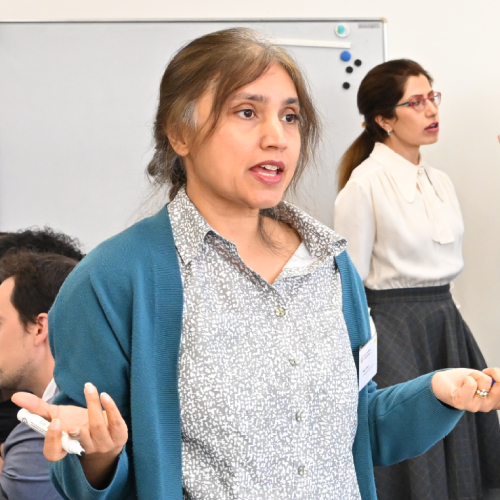
Dr Asiya Khan
Awardees:
- Dr Asiya Khan, University of Plymouth, UK (lead applicant)
- Professor Kojiro Shimada, University of the Ryukyus, Japan
- Job Oyebisi, Pye Interactive Limited, UK
- Professor Tim Coughlan, The Open University, UK
- Becci Robinson, TECwomen CIC
As AI use accelerates in higher education, personalised learning tools remain largely inaccessible, leaving neurodivergent STEM students reliant on freely available open‑source systems that have not been empirically tested for effectiveness or inclusivity. This project addresses this gap by building on prior work to create a bespoke prototype generative AI tool tailored to personalised learning needs. By generating and sharing evidence-based guidance across UK, Japanese, and international higher-education institutions, the project aims to foster more inclusive AI-enabled learning ecosystems for neurodivergent learners in STEM.
Resilient and sustainable AI for semiconductor manufacturing (UK, Japan)
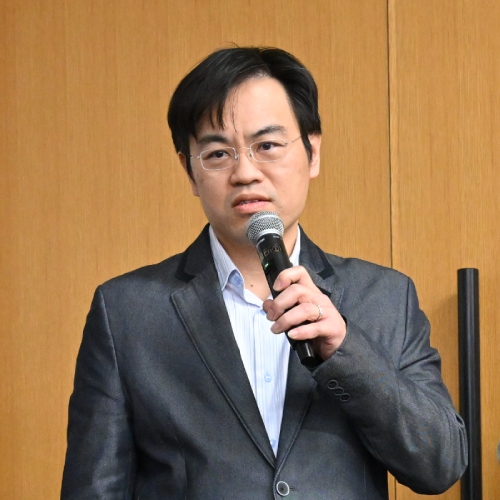
Dr Bruce (Jun-Yu) Ou
Awardees:
- Dr Bruce (Jun-Yu) Ou, University of Southampton, UK (lead applicant)
- Professor Masako Kishida, University of Tsukuba, Japan
- Professor Takashi Matsubara, Hokkaido University, Japan
- Dr Che-Chin Chen, National Institute of Applied Research, Taiwan
Semiconductor manufacturing remains extremely resource‑intensive, with a single 12‑inch wafer requiring over 1,000 kWh of energy and 10,000 litres of water. As semiconductor devices become more three‑dimensional in shape and approach angstrom‑scale feature sizes, inspection and metrology become critical. This project links the UK’s expertise in AI‑enabled extreme metrology and Japan’s expertise in physics‑informed neural networks, together with strong semiconductor partners in Taiwan and Japan. Together, they are developing a next‑generation 3D optical metrology method - finer and faster than conventional optical techniques. This approach has the potential to significantly cut energy use, water consumption, and carbon emissions across semiconductor manufacturing.
Next-generation stain-free histopathology for cancer diagnosis in low-resource settings using generative AI (Japan, Malaysia, UK)
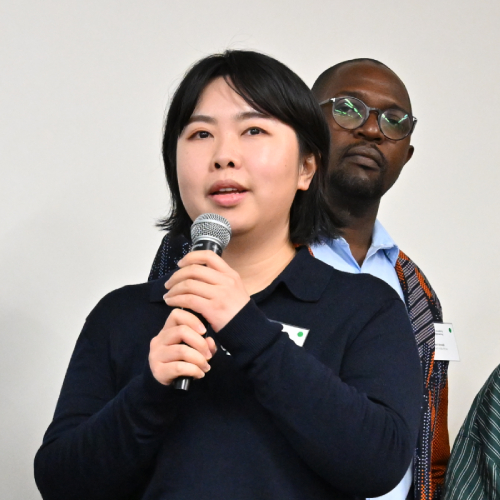
Dr Jing Liao
Awardees:
- Dr Jing Liao, Tohoku University, Japan (lead applicant)
- Dr Elaine Wan Ling Chan, Sunway University, Malaysia
- Dr Bruce (Jun-Yu) Ou, University of Southampton, UK
- Professor Lai-Meng Looi, University of Malaya, Malaysia
- Dr Chiew Seow-Fan, University Malaya Medical Centre, Malaysia
- Dr Shan E Ahmed Raza, University of Warwick, UK
- Dr Siti Fairus Abdul Sani, University Malaya Medical Centre, Malaysia
Cancer presents a significant global health challenge, particularly in low- and middle-income countries, where inadequate resources hinder healthcare delivery and diagnosis. Bringing together researchers in AI, digital pathology, and imaging from the UK, Malaysia, and Japan, this project seeks to develop an innovative, stain-free approach to cancer histopathology. The team is creating a portable, cost‑effective Raman imaging system, integrated with a generative AI model that translates images into virtual histology for near-real-time diagnostic assistance. By delivering a validated prototype, the project aims to lay the groundwork for faster, more sustainable, and more accessible cancer diagnostics, advancing scalable digital healthcare infrastructure and more equitable global cancer care.
Kobe BreathMap: causal AI linking air pollution to acute respiratory events for decision-ready clinical support (Japan, UK, Hong Kong Special Administrative Region)
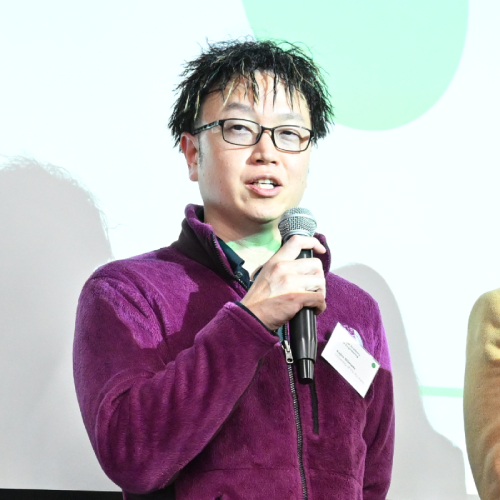
Professor Kojiro Shimada
Awardees:
- Professor Kojiro Shimada, University of the Ryukyus, Japan (lead applicant)
- Dr Asiya Khan, University of Plymouth, UK
- Professor Jacqueline Lam, The University Of Hong Kong, Hong Kong Special Administrative Region
- Dr Gita Khalili Moghaddam, University of Cambridge, UK
- Dr Yuji Fujitani, National Institute for Environmental Studies, Japan
- Professor Dongsik Kang, University of the Ryukyus, Japan
- Professor Tatsuya Nagano, Kobe University, Japan
- Professor Takahiro Jimba, The University of Tokyo, Japan
Air pollution can trigger sudden breathing problems, but clinicians and hospitals rarely receive decision-ready information about when pollution-related respiratory surges are most likely to occur. Kobe BreathMap is building a 12-month pilot for the Kobe region that estimates day-to-day air pollution exposure and links it to acute respiratory events, using de-identified health data already publicly available.
Mapping the global landscape of responsible AI: a UK-Japan cross-cultural taxonomy tool for context-aware AI governance (UK, Japan)
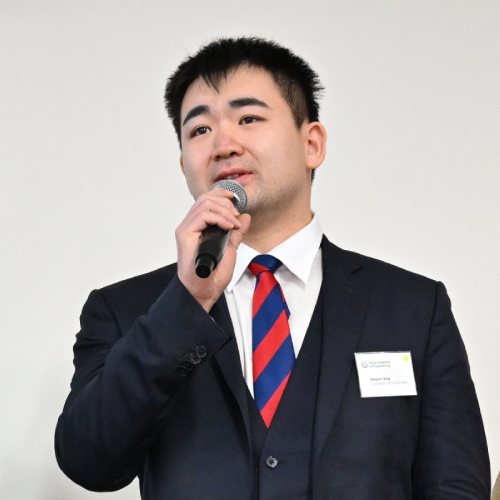
Dequn Teng
Awardees:
- Dequn Teng, University of Cambridge, UK (lead applicant)
- Dr Yuuki Shigemoto, GLOBIS Corporation, Japan
- Professor Taishi Sawabe, Nara Institute of Science and Technology, Japan
- Professor Tim Minshall, University of Cambridge, UK
This project develops an open-access interactive tool to map and compare definitions of Responsible AI across the UK, Japan, and other jurisdictions. The Responsible AI Taxonomy tool addresses a critical challenge in global AI governance: the fragmented and context-dependent nature of fundamental concepts such as accountability, transparency, fairness, and human-centredness. By systematically cataloguing how these terms are defined by governments, academic institutions, and industry bodies, this project enables researchers, policymakers, and practitioners to navigate the complex landscape of AI ethics with greater precision and cultural awareness.
Designing responsible AI for space: a UK–Japan youth innovation pilot on debris mitigation (Japan, UK)
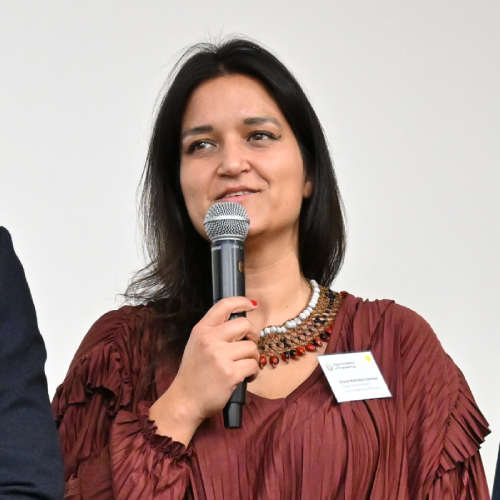
Diana Mastracci
Awardees:
- Diana Mastracci, Space4innovation, UK (lead applicant)
- Professor Takashi Hikasa, Tama University, Japan
- Professor Anthony Vodacek, Space4Innoavtion/Rochester Institute of Technology RIT, UK
- Mario Vargas Shakaim, GEO Indigenous Alliance/Space4Innovation
- Titus Letaapo, GEO Indigenous Alliance/Space4Innovation
- James Rattling Leaf Sr., GEO Indigenous Alliance
- Kriton Glenn, GEO Indigenous Alliance
As space debris increasingly threatens critical orbital infrastructure, the technical challenges of debris detection, prediction, and mitigation are inseparable from deeper questions of governance, safety, and responsibility. This project pilots a UK–Japan collaboration model for designing and evaluating responsible AI systems for space debris mitigation. The project seeks to explore how youth-led innovation, interdisciplinary mentoring, and Indigenous governance frameworks can be combined to guide AI design that is both technically robust and ethically grounded.