
Practical AI is the Academy’s programme about the realities of deploying AI in the infrastructure and services we rely on. The focus is on the practical decisions that determine whether AI delivers tangible improvements for people and places: how data is gathered, how risk is managed, how trust is built, and how engineers, policymakers and adopters solve problems together.
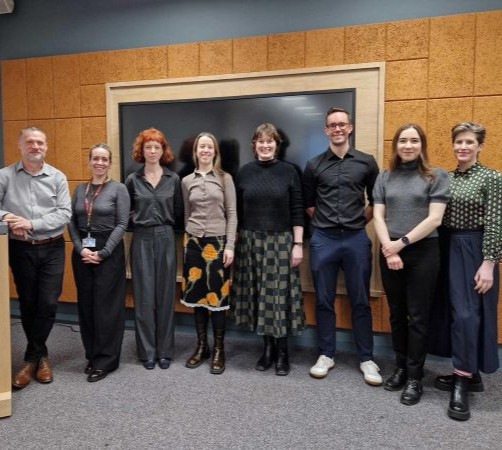
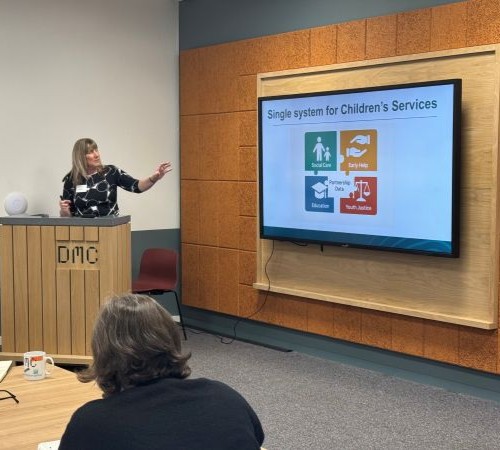
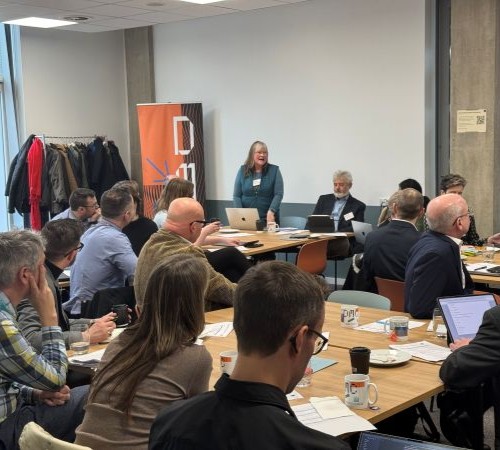
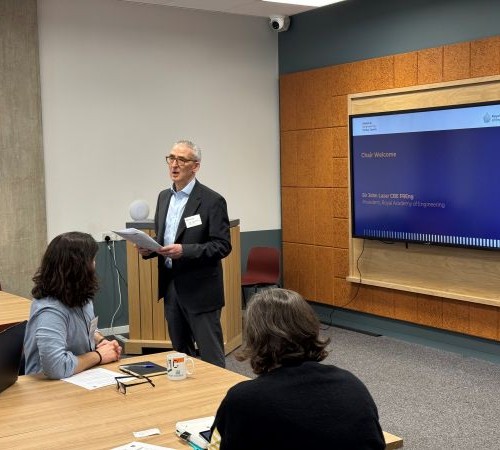
The Practical AI workshop the Academy convened in Barnsley, the UK’s first government-backed Tech Town, in partnership with the Cabinet Office Test, Learn and Grow programme, explored what it takes to use data and AI to improve outcomes for vulnerable children and adults.
Challenges in Barnsley
Young people in care in Barnsley
The potential cost of placing a child in out-of-borough care
The percentage of children who have moved placements three or more times in the past year
The challenge
Like most local authorities, Barnsley faces severe financial pressure. The costs of supporting a relatively small number of vulnerable people are high, and much of that spending happens at the point of crisis – the most expensive point of intervention. A child placed in out-of-borough residential care can cost tens of thousands of pounds per week. The goal is prevention through identifying when people need support earlier, and intervening before crisis is reached.
In Barnsley, the challenge of placement stability is clear. Of the 100+ young people aged 14-16 currently in care, over 20% have moved placements three or more times in the past year alone. Each move carries cost, disruption and instability for the young person. Identifying this cohort earlier through understanding the factors that predict this trajectory is the kind of problem that careful use of data and AI could help address. But doing so requires the relevant data to be accessible in a joined-up way – whether held centrally or shared across systems through federated approaches – structured to support analysis, appropriately anonymised or pseudonymised and linked across the bodies and systems that hold different pieces of the picture. That is the foundational work that must happen first.
Start with the problem, not the technology
Across the day, we heard that before reaching for AI, adopters need to state precisely what problem they are trying to solve, what a measurable improvement would look like, and what the minimum data needed to address it would be.
The instinct in digital transformation is to lead with infrastructure. But infrastructure is only as valuable as the questions it helps answer. It’s about starting with what change are you trying to produce, in whose life? Then working backwards.
Much of the most valuable analytical work in children’s services doesn’t require sophisticated generative AI. Identifying which young people are at risk of a trajectory into multiple placements can be done with standard machine learning techniques that are interpretable, auditable and well-understood. In this case, instead of a frontier AI system, predictive analytics on well-structured data is what’s required. But getting that data structured and accessible is the hard part.
Don’t automate what is broken
Many gains available to Barnsley today are in process improvement before AI enters the picture. If a process is inefficient or poorly designed, building AI on top of it makes it faster and more efficiently wrong.
Barnsley is already preparing to put this instinct into practice with its Sonic Brief tool. This transcription application, built on Microsoft Copilot, is designed to allow social workers to focus entirely on their interactions with children and families rather than on the mechanics of note-taking.
Following a successful period of judicial and union consultation, the tool is now moving towards its official launch. While it will be used during home visits, its intended impact is much broader, covering a wide range of practitioner interactions. By automating the capture of high-quality data as a byproduct of natural conversation, the tool is expected to significantly reduce administrative burdens. Ultimately, this shift aims to strengthen relationship-based practice and improve long-term outcomes for families.

That data, accumulated over time, becomes the foundation for better analytics. The lesson is in picking one problem, going narrow and deep, demonstrating value to the people whose jobs it affects and letting them become the advocates.
Invest heavily in user requirements
Experience from Somerset Council, is an illustration of what this costs and what it is worth. Its Transform Family View, a single dashboard bringing together data from over 40 partner organisations, spanning local government, the NHS, schools, the voluntary sector and research institutions, now has 1,500 users and has freed up an estimated 4,000 hours of practitioner time in 18 months.
It took a decade to build, including one complete rebuild. The first version failed because it was built without involving users. The team assumed they knew what social workers needed. The result had data in binary format with no visualisation, no way to see patterns or trends over time and no corporate ownership, meaning no accountability and no sustainability. As a result, it was not adopted.
The second version was built differently. Six months were spent on user requirements before any development began. That work revealed gaps in IT literacy among social workers, confirmed the need for radical simplicity, and produced over 100 specific requests for data that shaped every design decision.
Maintain human oversight by design
AI tools in high-stakes services should surface information, flag risks and reduce administrative burden. But they shouldn’t be in charge of decision-making itself.
Systems should be able to communicate uncertainty and be interpretable, where practitioners can understand not just what a system recommends but why, and they need to be able to interrogate that reasoning. The people using these systems need to understand how they work not at a technical level, but well enough to maintain critical engagement with what they are being told.
Connected Bradford, whose linked dataset covers 1.4 million people across health, social care and education, has held to this principle throughout. Its tools are designed to aid clinical and professional judgement, not replace it. That choice is part of why the system has maintained the trust of the partners and communities it works with.
Build trust through trustworthy action
Public trust in data and AI initiatives is not built through consultation exercises or communication campaigns alone. Equally important is demonstrably trustworthy behaviour, demonstrated consistently over time.
Somerset’s consultation experience illustrates both the limits of conventional approaches and the value of direct engagement. When they sent a survey to 1,500 families, it yielded four responses, whereas going into community groups directly, giving young people concrete scenarios and asking how they would want services to respond, produced rich, honest answers that shaped the system’s design.
The people least likely to engage with formal consultation processes are often those most dependent on the services being designed. Reaching them requires going to where they already are, using scenarios rather than abstractions, and telling people what changed as a result of their input.
AI systems trained on historical administrative data often reflect the inequalities embedded in how that data was collected. The most vulnerable people are often those whose records are most incomplete or inconsistent, who are the same people least likely to appear in engagement processes. Designing governance frameworks that account for this, rather than assuming that available data is representative, is critical.
None of this is straightforward and none of it is fast
Some of the barriers Barnsley and councils like it face are not ones they can solve alone. Across the day, there was a call for national data standards in social care and education. Social care, in particular, is heavily free-text based, which means there is no standard way to record what intervention was provided, when, or with what outcome, which makes building linked, analysable datasets harder. This is a gap that central government is well-placed to address by providing the shared infrastructure and standards that local actors can't create individually.
The technology layer matters, but it only delivers if what sits beneath it has been built with care, with users and with a clear sense of what problem it is trying to solve.
Blog series: Engineering Responsible AI
This programme explores themes around the safe and ethical development and deployment of AI through interviews with AI…
Practical AI
Practical AI describes the responsible integration of AI into everyday infrastructure and services to deliver measurabl…
Engineering policy
The Academy provides independent, authoritative advice to government. The Academy also responds to Parliamentary, gover…