
Overview
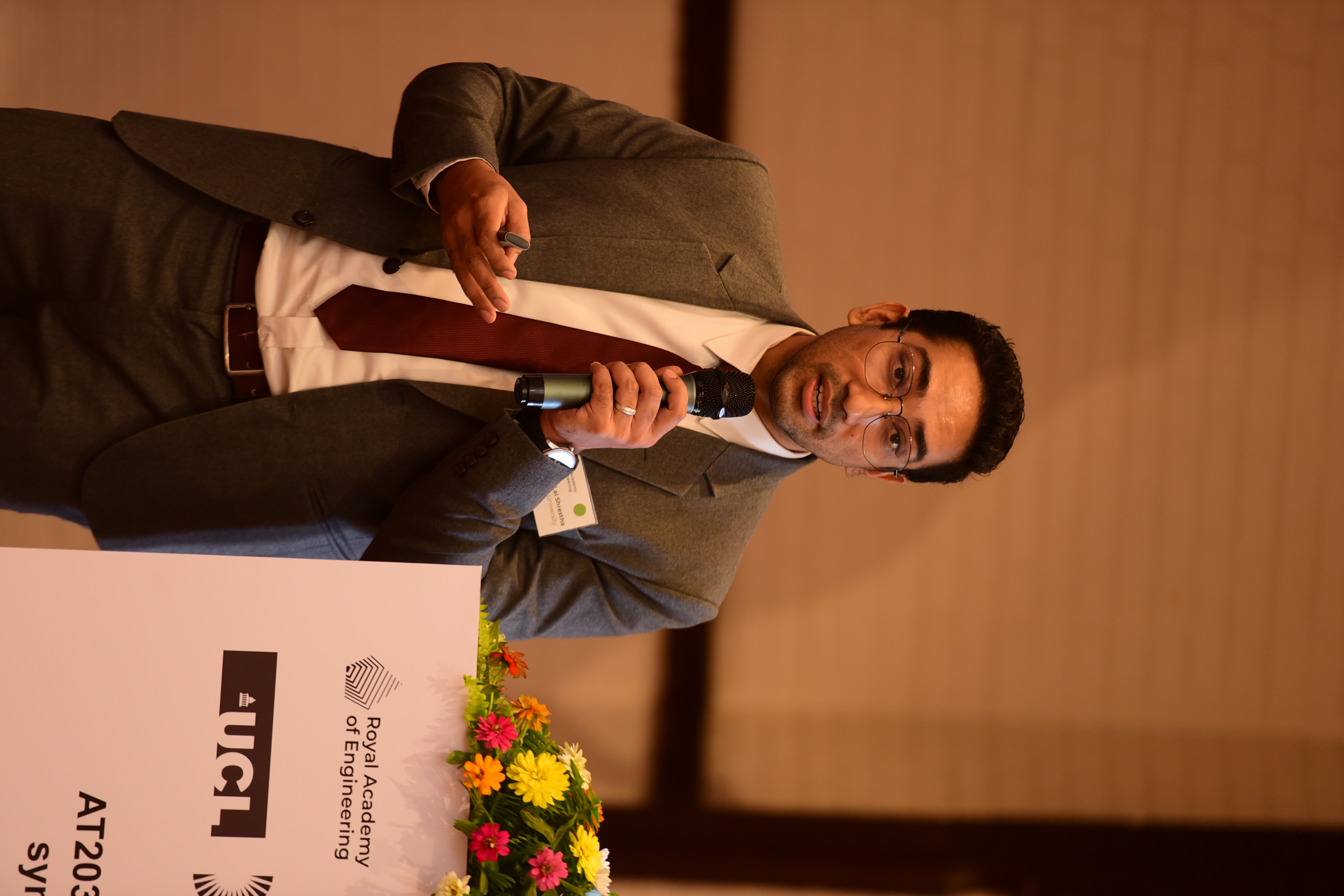
Dr Pratisthit has contributed to the AT2030 Frontiers symposium as a session co-chair and partner, playing a key role in its growth, and is now an awardee*. Their Limb-cycle project improves access to affordable, custom-fit prosthetic sockets in Nepal and other low-resource settings using AI-driven design and upcycled plastic materials, reducing costs, lowering waste, and supporting local innovation.
*The project has been awarded as part of a collaboration between the Royal Academy of Engineering and UCL Global Disability Innovation (GDI) Hub’s AT2030 Programme. AT2030 is funded by UK International Development.
Challenge
In Nepal and many other low‑resource settings, access to high‑quality prosthetic sockets remains severely limited due to two interconnected challenges: clinical complexity and material costs. Producing a custom‑fit socket currently requires skilled clinicians, time‑intensive manual casting, and expensive imported materials, making services inaccessible to many amputees, particularly in rural areas.
At the same time, large volumes of reusable polymer and composite waste are discarded locally without pathways for medical reuse, while prosthetic manufacturing continues to rely on costly, carbon‑intensive supply chains. These constraints prevent prosthetic services from scaling, place a financial burden on users and providers, and perpetuate dependence on external expertise highlighting an urgent need for affordable, locally driven, and technically robust alternatives.
"The future of assistive technology lies in empowering local ecosystems to design, produce, and maintain technologies with users, ensuring accessibility, affordability, and adaptability for all.”
Dr Pratisthit
Project solution
The Limb‑Cycle project delivers a practical solution by combining AI‑driven prosthetic socket design with circular, low‑cost local manufacturing. It will develop an AI‑powered tool that converts limb scans from mobile apps or low‑cost scanners into clinically accurate 3D socket models, reducing reliance on manual casting and scarce specialist expertise.
The project will establish a validated process to upcycle locally sourced polypropylene and carbon‑fibre polymer waste into medical‑grade 3D printing material, significantly lowering costs and environmental impact. Led by Kathmandu University, the multidisciplinary team will co‑design, prototype, and clinically validate sockets over 12 months, creating a scalable, locally owned model for affordable and sustainable prosthetic provision in Nepal and other LMICs.
Team
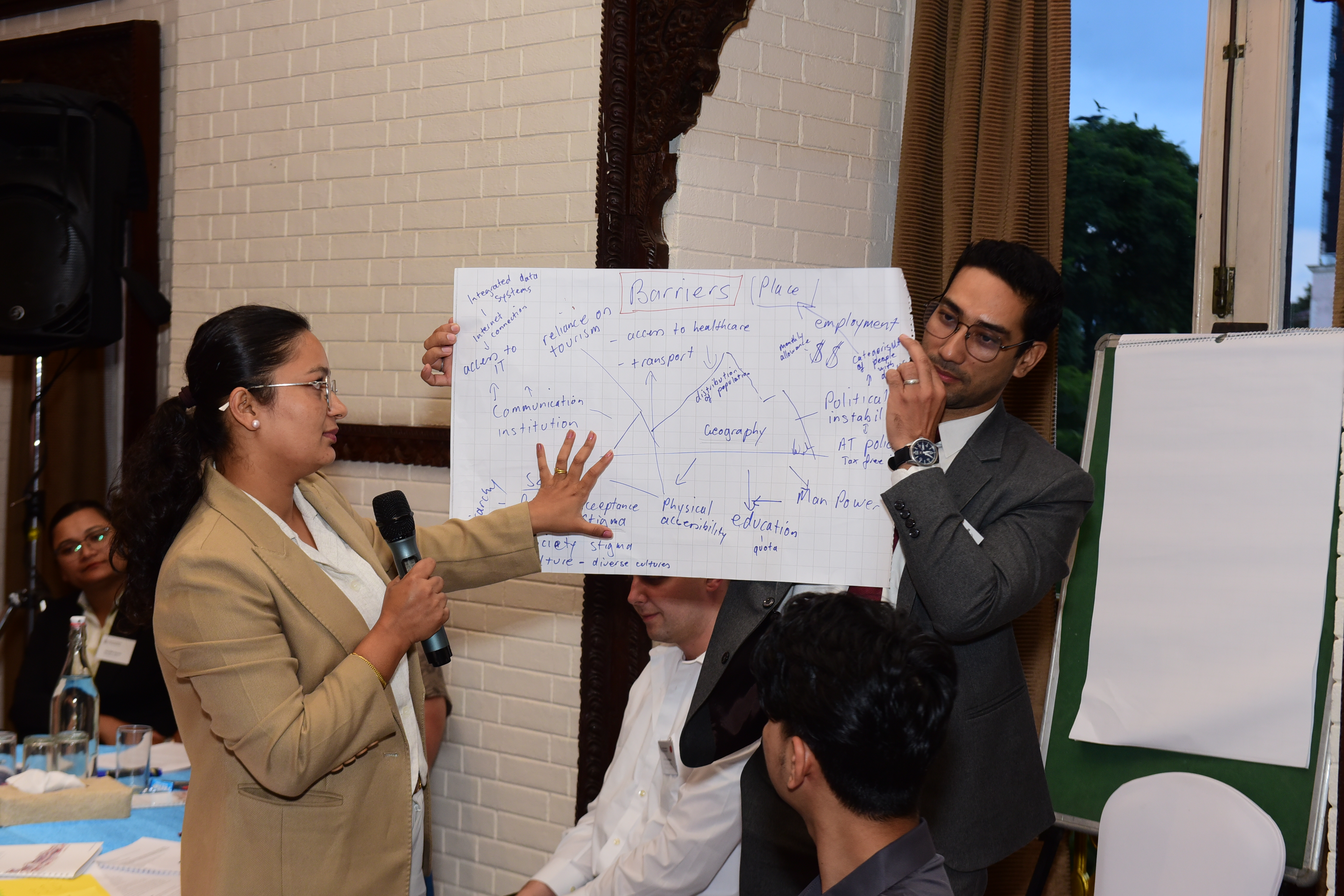
- Amit Ratna Bajracharya, Limb Care Nepal Pvt. Ltd, Nepal
- Dr Yogeshvaran Ramanathapuram Nagarajan, De Montfort University, UK
- Amrita Lama, Limb Care Nepal Pvt. Ltd, Nepal
- Strena Shrestha, Nepla Fil Pvt. Ltd., Nepal
- Raju Shrestha, Nepal
- Amit Gupta, Nepal
- Arya Ghimire, Design Lab, Kathmandu University, Nepal
- Dr Surendra Sujakhu, Kathmandu University, Nepal
Interested in participating in the Frontiers programme?
Visit our Symposia pages for more information including eligibility.