
A sustainable solar solution
The challenge
Global solar panel waste could reach 60–78 million tonnes by 2050, creating a major waste challenge. While solar power plays a key role in tackling climate change, conventional solar technology is expensive, resource-intensive to manufacture, and has a typical lifespan of 25 years – creating an ever-growing mountain of waste as solar panels reach the ends of their lives.
The innovation
Professor Matthew Davies is developing a more sustainable manufacturing method for solar panels using an emerging solar technology: perovskite solar cells.
Not only will these solar panels be able to be reused, repaired, and recycled – rather than simply discarded at the end of their lives – they will also be capable of converting sunlight into electricity more efficiently. As perovskite solar cells can be produced through printing using special ink, there is potential to manufacture them more easily and at a much lower cost than traditional panels.
With the Green Future Fellowship funding, Professor Davies aims to ensure perovskite solar cells are sustainable, safe, and ready for large-scale use. The project will embed circular economy principles throughout the technology lifecycle, from materials and manufacturing to repair, reuse, remanufacture and end-of-life recovery – establishing a new model for how clean energy technologies are designed, manufactured and managed. If successful, they could be a viable mainstream alternative to existing solar cell technology and help communities produce and manage their own clean energy in a way that is practical, affordable and sustainable.
The innovator
Professor Davies is Head of the Applied Photochemistry Group at the SPECIFIC UK Innovation and Knowledge Centre led by Swansea University. He is committed to improving energy access and supporting more equitable and resilient energy systems. Through international collaborations and his role as UNESCO Chair in Sustainable Energy Technologies, he works with partners across Africa and beyond to explore how sustainable solar manufacturing can create jobs, build local skills and give communities greater control over their own energy future.
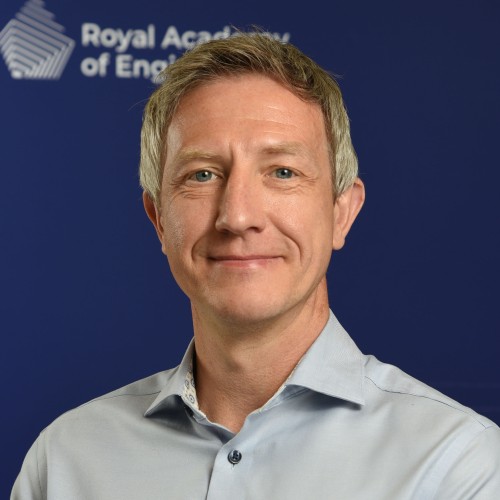
We have a unique opportunity to embed circular economy principles into the next generation of solar technologies, keeping valuable materials in use for longer while boosting UK manufacturing, skills and resilience.
Related content
View all programmesSupport for research
The Academy runs a number of grants to support excellent researchers carry out engineering activities and to enable clo…
Green Future Fellowship
The Green Future Fellowship programme supports academics, entrepreneurs and innovators to develop and scale up their br…