
An ‘ultra’ sound solution for forever chemicals
The challenge
From cosmetics and clothing, to washing powders and non-stick pans, hard-to-destroy chemicals are everywhere. Every time we clean our clothes, wash off our make-up or cook food, they disappear down the drain and slowly make their way into our ecosystem.
These synthetic chemicals, often referred to as chemicals of emerging concern (CEC), are designed to be durable. Of particular concern among this group are per- and polyfluoroalkyl substances (PFAS): chemicals so stubbornly resistant to water, oil and heat that they have been coined ‘forever chemicals’. Their merits are also their pitfalls, as they persist in the environment for decades, accumulating in our waterways, and ultimately in our own bodies.
How do we put an end to these chemicals continuously cycling through our environment for years, posing risks to human and environmental health?
The innovation
Professor Madeleine Bussemaker is developing a promising new technology that uses high-frequency ultrasound, known as sonolysis, to break down CECs.
Unlike some current methods to destroy CECs, this process does not rely on extremely high temperatures or pressures, or produce potent greenhouse gases. Instead, it aims to safely destroy CECs without producing toxic byproducts, and turn waste streams into valuable feedstocks, supporting a more circular, low-carbon economy.
Through the Green Future Fellowship funding, Professor Bussemaker will take the technology from proof-of-concept towards practical application in real treatment systems, as well as developing advancements to translate it to other CECs. Given the technology’s sustainability advantages – requiring no added chemicals and able to operate intermittently using renewable energy – it could become a platform for low-carbon innovation across multiple sectors.
In the longer term, this work could help reshape how we think about waste, turning problematic streams into valuable inputs and supporting a more resilient, circular and environmentally-friendly economy.
The innovator
Professor Bussemaker is an academic originally trained in chemistry and mathematics. She completed a PhD in sonochemistry in Australia and is now a Professor in Chemical Engineering at the University of Surrey. She has a keen interest in what societies release into the environment, the consequences of these outputs, and how to turn waste into useful byproducts, inspiring her research.
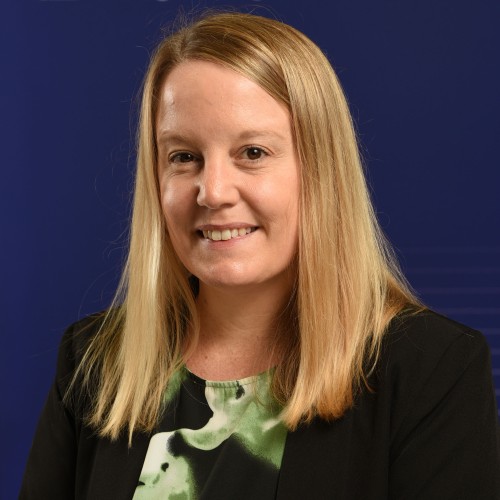
PFAS have lots of interesting and complex chemistry that makes engineering solutions very challenging. And we all like a good problem to solve.
Related content
View all programmesSupport for research
The Academy runs a number of grants to support excellent researchers carry out engineering activities and to enable clo…
Green Future Fellowship
The Green Future Fellowship programme supports academics, entrepreneurs and innovators to develop and scale up their br…