
Bottling renewable energy in liquid ammonia
The challenge
Long-term storage of renewable energy is one of the main bottlenecks to decarbonising our society. The cost of generating renewable energy has dropped dramatically in the last two decades, but due to the intermittent nature of renewable energy sources – fluctuating daily, seasonally and year to year – we are still dependent on fossil fuels to meet our constant energy demands. Storing energy over the long term remains a major challenge.
Green ammonia offers a powerful solution to the energy storage challenge, enabling us to store energy in the chemical bonds of a carbon-free molecule. This energy can then be released electrochemically by producing hydrogen or by direct combustion.
The challenge? The production of green ammonia – made using renewable electricity, water and nitrogen from the air – while technologically feasible, is very expensive and still uses the conventional process for ammonia synthesis, designed for a centralised and continuous energy supply. As a result, green ammonia is not currently economically viable as an energy store.
The innovation
Professor Laura Torrente aims to transform green ammonia production, by creating new chemical processes designed to cope with the intermittency of renewable energy supplies. By reducing costs and improving safety, the project aims to unlock large-scale use of green ammonia for energy storage, zero-carbon fuel and as a green fertiliser. As a result, green ammonia will support a transition away from fossil fuel dependence and support a net-zero energy system.
Through the Green Future Fellowship funding, she will further develop alternative ways of producing and storing green ammonia that are both cheaper and cleaner than existing methods. In evolving the way in which we store clean energy, this project could significantly reshape the UK’s energy system, strengthen energy security, and deliver major environmental and economic benefits.
The innovator
Professor Torrente is Professor of Reaction Engineering and Catalysis at the University of Cambridge. She leads the Catalysis and Process Integration research group within the university’s Department of Chemical Engineering and Biotechnology and is strongly motivated by the need to transform the chemical industry so it can operate within a net-zero energy system.
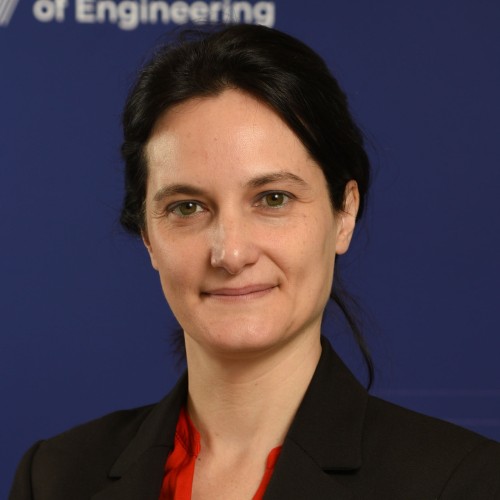
Green ammonia has the potential to be transformational, for the environment, economy, the UK and globally.
Related content
View all programmesSupport for research
The Academy runs a number of grants to support excellent researchers carry out engineering activities and to enable clo…
Green Future Fellowship
The Green Future Fellowship programme supports academics, entrepreneurs and innovators to develop and scale up their br…