
Turning waste carbon into fossil-free chemicals
The challenge
What if the waste we dispose of every day could help cut millions of tonnes of carbon emissions and replace the fossil fuels used to make everyday products? The BIO-VISTA project, led by Dr Jaime Massanet-Nicolau, aims to do exactly that by turning waste carbon into acetic acid – a valuable chemical used in plastics, polymers and many other materials we rely on daily.
Today, the chemicals behind products like cosmetics, clothing, smartphones and kitchenware are mostly made from oil and gas, releasing large amounts of CO₂ in the process. At the same time, huge quantities of carbon-rich waste – including sewage sludge, food and even industrial gases – are simply disposed of as waste.
The innovation
BIO-VISTA uses low-temperature microbes to convert this waste into organic volatile fatty acids (VFAs) such as acetic acid, a key industrial building block. Using novel, in-situ extraction and low-temperature fermentation, the technology can boost yields of VFAs by 41% while cutting energy use by 60%. If fully realised, this technology could meet and even exceed the current global demand for acetic acid – around 17 million tonnes per year – using just a fraction of the energy that the process currently demands.
By working with UK water companies including Dŵr Cymru Welsh Water, agricultural partners such as First Milk, and technology providers like Aqua Operations, the team at the University of South Wales’ Sustainable Environment Research Centre (SERC) aims to scale the process for industrial use, helping to create a circular economy where waste becomes a valuable resource rather than a problem.
Over the 10 years of the fellowship, Jaime and his team will develop the BIO-VISTA technology, moving from lab-scale experiments to pilot plants, with the aim of being ready to seek substantial funding for full-scale rollout.
The innovator
Dr Massanet-Nicolau is an Associate Professor at the University of South Wales. His career began in plant sciences, before joining Thames Water as a research microbiologist, where he completed a PhD on biohydrogen production and saw first-hand how big utility companies think about waste. Moving into academia, he spent two decades working on industrial microbiology with a focus on bio-refining, which is what inspired this project.
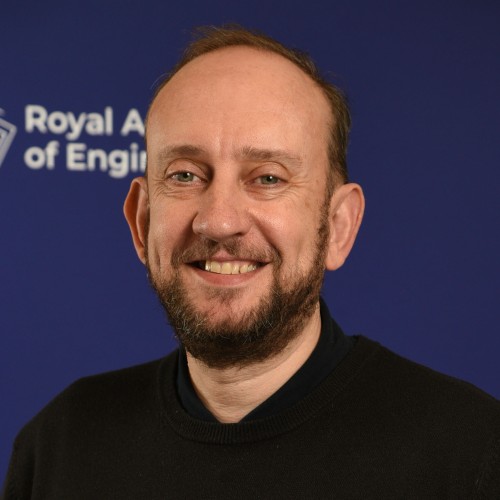
We have to stop treating carbon as waste and start treating it as a critical resource that we must manage carefully.
Related content
View all programmesSupport for research
The Academy runs a number of grants to support excellent researchers carry out engineering activities and to enable clo…
Green Future Fellowship
The Green Future Fellowship programme supports academics, entrepreneurs and innovators to develop and scale up their br…