
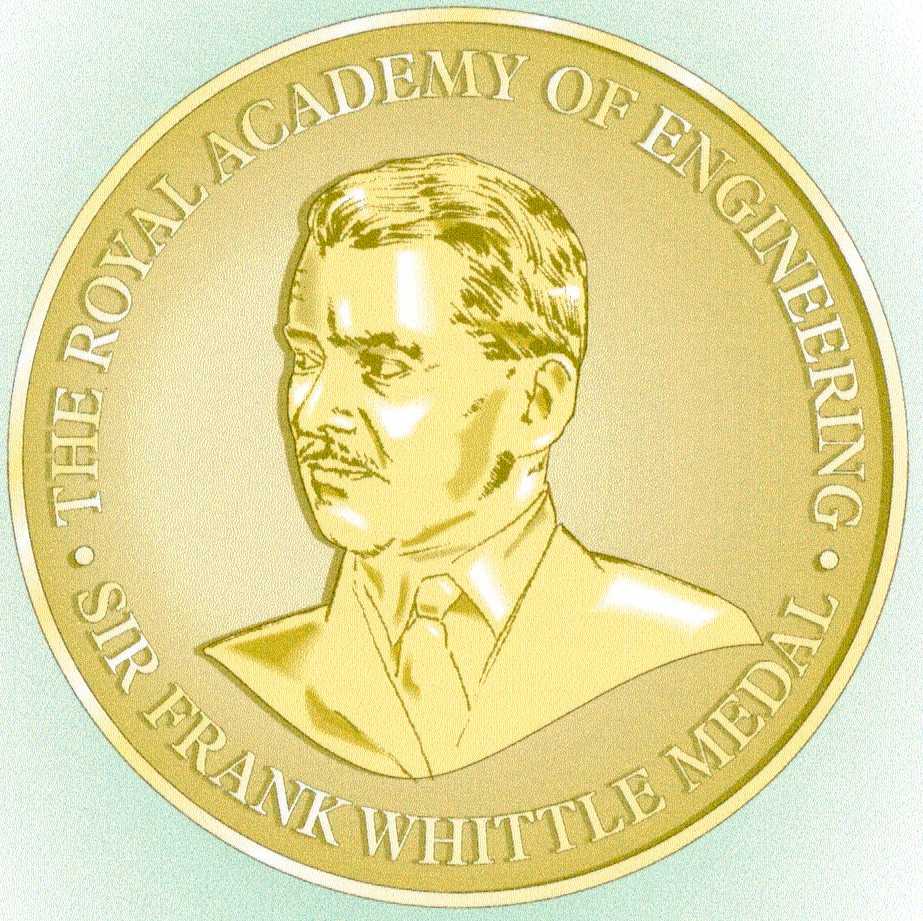
Named after Britain’s jet engine genius, the Sir Frank Whittle Medal is awarded to an engineer resident in the UK whose outstanding and sustained achievements have had a profound impact on their engineering discipline.
Who is eligible to be nominated?
- Nominees must be resident in the UK.
- Self-nominations are not accepted. If you wish to be considered but do not have a nominator, please contact the Academy.
Meet our 2026 winner
Professor Dame Wendy Hall DBE FREng FRS
Dame Wendy Hall is one of the UK's most distinguished computer scientists, with a career spanning more than five decades. A leader in web science, she has played a pivotal role in its development and helped shape the UK's national AI strategy. Her groundbreaking research in multimedia and hypermedia began years before the emergence of the World Wide Web, influencing the development of digital libraries and the evolution of the internet.
Beyond her research and advisory roles, Dame Wendy has been a vocal champion of women in engineering and a role model for future generations of computer scientists and engineers, including as Senior Vice President of the Royal Academy of Engineering from 2005 to 2008. Her career exemplifies leadership, vision and a dedication to the responsible development and governance of emerging technologies.
Dame Wendy has just been announced as President of the British Science Association for 2026-27 and will deliver her Presidential Address – a conversation with BBC Technology Editor Zoe Kleinman about the future of AI – at this year’s British Science Festival, to be hosted by the University of Southampton.

Recent winners


About Sir Frank Whittle
Sir Frank Whittle OM KBE CB FEng FRS, was one of the most creative engineers of all time and a Founding Fellow of the Royal Academy of Engineering. British pioneer of the jet engine, he made an extraordinary contribution to society despite many difficulties.
Frank Whittle was born in Coventry in 1907, the son of a skilful mechanic and inventor. From an early age he experimented in his father’s factory and was fascinated by the fledgling aviation industry. He joined the RAF in 1923 as an apprentice. His talents were soon recognised, and he qualified as a pilot at the RAF College, Cranwell, before reading Mechanical Sciences at the University of Cambridge. While at Cranwell he had developed a thesis on jet propulsion and patented his design in 1930, but officials at the Air Ministry dismissed his ideas as impractical. However, in 1936 he and some associates founded a company, Power Jets Ltd, to develop the theory.
Despite political and financial adversity, Whittle’s jet engine made its maiden flight on 15 May 1941, powering the purpose-built Gloster E28/39. By 1944 the engine was in service with the RAF. The technology quickly spread and has been fully exploited worldwide.
News about the Sir Frank Whittle Medal

‘National treasure’ Internet and AI pioneer Dame Wendy Hall wins the Sir Frank Whittle Medal
Professor Dame Wendy Hall DBE FREng FRS, Regius Professor of Computer Science at the University of Southampton, has received one of the Royal Academy of Engineering’s most prestigious individual awar…

Nuclear pioneer Fiona Rayment wins the Sir Frank Whittle Medal
Nuclear pioneer Dr Fiona Rayment OBE FREng FRSE, President of the Nuclear Institute, will tonight receive one of the Royal Academy of Engineering’s highest accolades, the Sir Frank Whittle Medal, in…