About MATERIALS for Active Learning for Schools
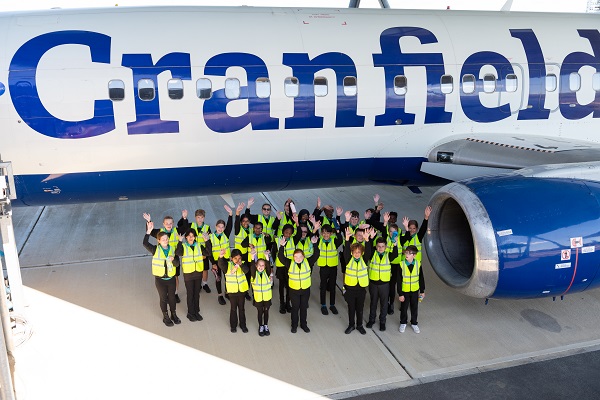
The MATERIals project delivered materials engineering focused activities for year 5/6 pupils at three primary schools (6 classes) in the Milton Keynes/Bedford area as well as at a “mini-conference” at Cranfield University.
The aim was to engage pupils from areas of multiple deprivation, a group that is underrepresented in engineering and STEM activities. By bringing materials engineers and engineering to pupils in schools that do not normally get engagement with outside STEM professionals, the team hoped to interest, inform and inspire them. This was reenforced by bringing them to Cranfield University to experience an engineering research environment.
Reasoning: Materials engineering roles are typically highly skilled and well paid (starting salaries ~7.8% higher than average). When pupils from areas of multiple deprivation (who may not normally have awareness of or exposure to STEM careers) engage in engineering activities, this can impact on their further studies and career.
Materials activities: Three activities were delivered at each school by volunteer engineers (PhD or early career researchers; ECRs). A final “mini conference” allowed school pupils to visit Cranfield University. Activities were accompanied by an experience-based talk explaining the activity and the engineer’s personal experience.
Training: Volunteers were given training and support in developing and delivering activities that were carried out at schools or at the conference. The aim was to support volunteer experience and build confidence with STEM outreach content.
Key outcomes
- Raising awareness and generating interest in STEM and STEM careers with school pupils in underserved areas.
- Train and involve early career and PhD researchers in developing and delivering outreach materials.
Key lessons learned
- Approaching schools is challenging but schools that did engage were enthusiastic and committed.
- Engineers were keen to volunteer at all levels. The focus was on ECRs but in future it is better to find a good way to integrate more senior volunteers into the project, e.g., going to schools in support of ECRs.
- It’s important to align activities to the national curriculum, and vital to pitch at the correct level. Future iterations of this project will involve better integration of volunteers with schools.
- Time, as well as money, can be an issue for schools. By providing resources, we were able to help with the second (e.g., coach travel, materiel for activities).