
The Royal Academy of Engineering has announced 12 new Ingenious grants for public engagement projects designed to inspire the next generation of engineers. Now in its 20th round, the programme started in 2007 and is funded by the Department for Science, Innovation and Technology, offering grants of up to £30,000 per project.
With projects engaging communities throughout the UK, Ingenious aims to reach underrepresented audiences and change people’s perceptions of engineering. The programme trains and encourages engineers to share their stories and engineering expertise with the public.
This year's projects range from maritime engineering heritage and a game about energy supply to factories of the future and flood mapping.
STEM at sea is a dynamic learning and engagement programme centred on the historic Tall Ship Glenlee in Glasgow. The project aims to inspire future problem-solvers and build pride in Glasgow’s maritime heritage.
Factory of the future will be a state‑of‑the‑art hub for smart automation, digital manufacturing, sustainable materials, nanotechnology, photonics, and advanced composites. The project will use this exciting facility to deliver a sustainable programme that inspires future engineers and enables public engagement.

Many projects are aiming to inspire the next generation of engineers, including Engineering our city at The Ruth Gorse Academy in Leeds designed to inspire young people and their families by exploring the creativity, diversity, and real world impact of engineering.
Discover Energy through play, which will deliver a hands-on programme introducing students to energy systems, engineering problem-solving and the clean energy transition through gamification and ethical decision-making.
Ingenious Panel Chair Pete Lomas FREng commented:
“As the Royal Academy of Engineering celebrates its 50th anniversary, I am delighted to see the 20th round of our Ingenious grants scheme supporting such a wide range of excellent projects across the UK. Between them, they bring engagement opportunities to underrepresented groups as we strive to build a rich and diverse pool of future engineering talent, a crucial strand of the Academy’s 2030 strategy.
“Effective communication of what we do is hugely important and Ingenious provides vital training to encourage and enable engineers to become the public face of engineering. Through our projects, people can see how engineering activities integrate into society at large.”
“Congratulations to all the 2026 awardees and we look forward to following your events over the coming year.”
The full list of funded Ingenious projects for 2026 is:
National/multicentre
The Transport Box for SEND and CAMHS by Mobility Lab and UK Unplugged
Led by Mobility Policy Lab and UK Unplugged, this is a collaborative, hands on initiative to develop a Transport Box – an engagement tool bringing together transport professionals, neurodivergent young people, young people with learning difficulties and communities. Inspired by the Mobility Camp unconference and UK Unplugged’s Activity Boxes, the project will enable place based co design in Leeds and Stockport, creating activity boxes that explore transport challenges in an accessible way. Aimed particularly at neurodivergent young people and those from low income backgrounds or engaged with Child and Adolescent Mental Health Services (CAMHS), the Transport Box seeks to increase engineers’ confidence in engaging with these groups, encourage exploration of street environments, and introduce key engineering concepts through creative play. Engineers will receive training, take part in co design sessions, and help to distribute boxes.
Discover Energy Through Play, with Megawatt
Led by Curieus Games (named after nuclear pioneer Marie Curie), this project aims to recruit and train early career engineers to deliver Megawatt, a hands on programme introducing students to energy systems, engineering problem solving, and the clean energy transition through gamification and ethical decision making. The engineers will deliver a series of full day workshops in schools, with training available to help teachers to embed Megawatt into their curriculum. Schools will receive the Megawatt games and resources, co designed with teachers. Focusing on communities underrepresented in engineering, workshops will include career discussions and help students see engineering as accessible, while engineers gain structured outreach experience as Megawatt Ambassadors.
Living with Floods: Empowering Young People with Engineering Confidence
Living with Floods is a UK wide engineering engagement project, led by the University of West London, helping students aged 11-16 in flood risk communities to understand, prepare for, and manage the emotional response to flooding. During half day “Flood Labs,” students will explore hydrology and flood risk engineering using storytelling, virtual reality simulation, and practical design, replacing anxiety with informed action. Through partnerships with local schools, the project will deliver activities across three regions, including a creative writing workshop, an interactive simulation game, and a knowledge and adaptation session led by engineers. The students will learn about flood processes and gain confidence in coping with extreme weather, along with practical ideas for community resilience, while the engineers will develop inclusive communication skills.
Engineer a story
Yorkshire
STEM Club at the Ruth Gorse Academy project "Engineering our city"
Engineering our city is a year long programme at the Ruth Gorse Academy in Leeds, designed to inspire young people and their families by exploring the creativity, diversity, and real world impact of engineering. Over the next year, the project will engage students through hands on investigations, competitions, coding and STEM clubs, and community science, supported by practising engineers. Early engagement includes participation in a Women in STEM event to build interest among underrepresented groups. The programme targets the school’s diverse community, including students eligible for free school meals, those with English as an additional language, and SEND needs. Supported by engineers and students from the University of Leeds, the project focuses on sustained engagement, breaking down barriers, broadening perceptions of engineering, and building confidence in problem solving.
Northern Ireland
Factory of the Future: Dream, Design, Do
The Advanced Manufacturing Innovation Centre (AMIC) is an industry led, open access innovation centre designed to elevate Northern Ireland’s manufacturing sector by providing cutting edge facilities, expert engineering support, and collaborative research opportunities. Opening this year, its Factory of the Future will be a state of the art hub for smart automation, digital manufacturing, sustainable materials, nanotechnology, photonics, and advanced composites. The project will use this exciting facility to deliver a free, four-day programme of AMIC Discovery Days for local pupils aged 12-17, offering hands on stations, real world challenges, mentoring from AMIC engineers, and a final Celebration Event. Prioritising diversity and accessibility, the project aims to tackle misconceptions about engineering and inspire young people across Northern Ireland.
Scotland
Sail the Future - STEM at Sea onboard The Tall Ship Glenlee
Sail the Future is a dynamic learning and engagement programme centred on the historic Tall Ship Glenlee in Glasgow. Using the ship’s heritage to inspire young people and connect them with the maritime sector, the programme will empower students from local schools to co-design and test new STEM workshops that will become a lasting resource for other schools and visiting groups. Clyde-based marine technology consultants Malin Group will partner with the project and their engineers will collaborate with pupils and museum staff to bring authentic insight into maritime engineering. The project aims to inspire future problem-solvers and build pride in Glasgow’s maritime heritage.
South West
Engineer a Story
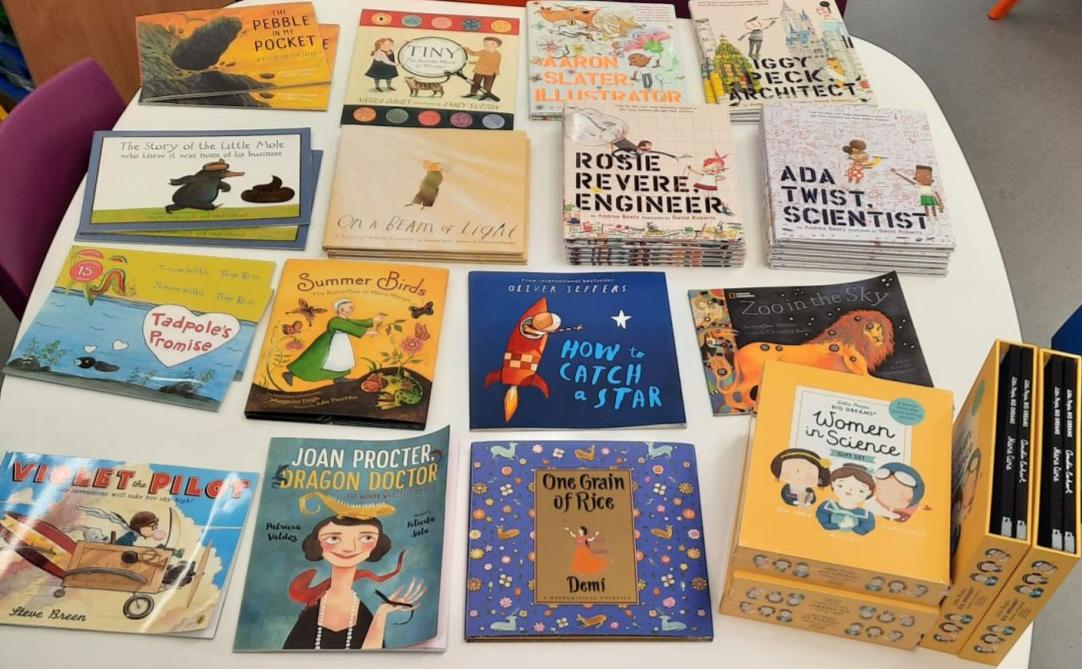
Engineer a Story will bring the magic of storytelling together with the creativity of engineering to inspire children and their families. The project, led by University of the West of England, will train engineers to share stories that capture young imaginations and break down stereotypes about who can become an engineer, using inclusive techniques and ensuring that sessions are accessible for children with SEND. Once trained, engineers will visit schools, libraries, festivals, and community groups to run around storytelling sessions for children aged 3-8, each featuring a story read aloud, a short Q&A, and a hands on activity. Children, parents, and engineers will all benefit, with lasting resources available for continued use.
North West
Everyday Engineers: Creative Problem-Solving with Children
Everyday Engineers is a pilot programme, led by ClickSafe Club, where engineers will co create with 7-14 year olds from underrepresented groups in Manchester to design and prototype solutions to everyday problems. The project will introduce children to engineering fields including electrical and electronic engineering, mechanical engineering, and computer/software engineering through wiring, circuits, movement, structures, coding, and robotics. Using the engineering design cycle, participants will also learn about systems and design engineering, seeing how engineers creatively solve everyday challenges. Delivered through a Makers Lab in a community venue, the project combines hands on activities with inclusive storytelling, helping engineers to engage with diverse communities and highlighting engineering as creative and human centred.
Bridge to the Future
Bridge to the Future is an outreach project, led by the University of Salford, for students aged 12–13 who are thinking about their future and whether to choose STEM related subjects. Focusing on disadvantaged areas and underrepresented groups, the programme aims to raise awareness of the social and economic impacts of bridge failures, linking these issues to local communities. Through interactive workshops, computer based model building, and physical tests using PASCO Engineering kits, pupils develop simple engineering solutions. Pupils will also visit the University of Salford’s structural engineering laboratories to test their designs, helping them to think like engineers and encouraging them to view engineering as a future career.
London and South East
Combat Engineer Challenge
The Royal Engineers Museum aims to inspire young people across Medway to see how exciting and relevant combat engineering can be to their lives. Combat Engineer Challenge will work with youth groups and schools to engage young people aged 12-18 in hands on STEM challenges, delivered in the style of real-life combat engineering tasks. The activities will show how combat engineering underpins the work of the Royal Engineers and links classroom subjects to real-world roles. The project will also provide professional development for Royal Engineers soldiers, reserves, and veterans as STEM ambassadors, giving young people diverse role models and broadening their understanding of combat engineering careers.
Sustainable London
Sustainable London is a year-long programme that will train and support engineers to work with disadvantaged students aged 14-16 across schools in six London boroughs. Through fireside chats, hackathons, mentoring and employer insight days, students will design engineering solutions to local sustainability challenges and progress from school challenges to borough finals and a London-wide finale. The programme prioritises young people from underrepresented communities and will help them to develop leadership, teamwork, and problem solving skills. Led by Motivez, and building on previous programmes, Sustainable London adds the MotivezHive digital platform and partnerships with local STEM companies, creating a scalable model that inspires diverse young people and advances sustainability goals.
BEYOND - Black & Ethnic Youths Opening New Doors
BEYOND is a public engagement initiative, led by engineers from Arup and HDR, designed to inspire and equip the next generation of engineers through interactive, multidisciplinary workshops and mentoring. Created for young black and ethnic minority students from disadvantaged backgrounds, it connects classroom STEM learning to real-world engineering challenges focused on digital innovation, sustainability, and the built environment. Working with schools, the programme will offer hands-on workshops, mentoring, and talks led by engineers who reflect students’ lived experiences. By building skills, confidence, and awareness of engineering careers, BEYOND aims to strengthen the pipeline of diverse talent and contribute to a more inclusive engineering workforce.
Notes for editors
Ingenious is a grants scheme, run by the Royal Academy of Engineering, for projects that engage the public with engineers and engineering. The scheme is supported by the Department for Science, Innovation and Technology.
The Ingenious programme aims to:
· Support imaginative and creative public engagement, raising awareness of the diversity, nature and impact of engineering
· Broaden perceptions of engineering, targeting public audiences currently underrepresented in engineering
· Build capacity for engineering public engagement by offering engineers training and opportunities in public engagement
Ingenious has funded 360 projects to date, providing opportunities for over 10,000 engineers to take part in public engagement activities, to gain skills in communication and to help bring engineering to the very centre of society. Ingenious projects have reached nearly 4 million members of the public.
The Royal Academy of Engineering creates and leads a community of outstanding experts and innovators to engineer better lives. As a charity and a Fellowship, we deliver public benefit from excellence in engineering and technology and convene leading businesspeople, entrepreneurs, innovators and academics across engineering and technology. As a National Academy, we provide leadership for engineering and technology, and independent, expert advice to policymakers in the UK and beyond. Our work is enabled by funding from the Department for Science, Innovation and Technology, corporate and university partners, charitable trusts and foundations, and individual donors.