
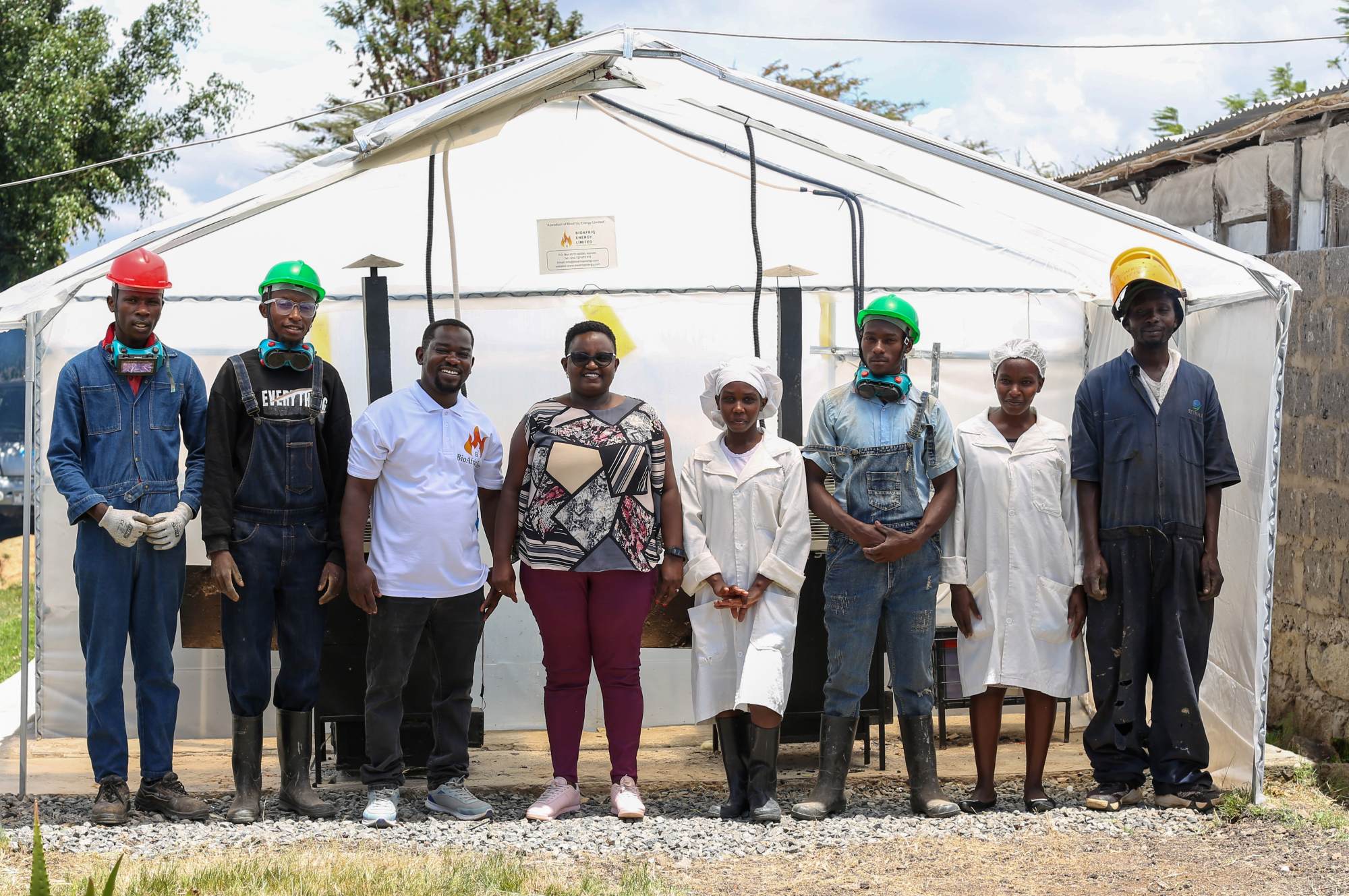
The BioAfriq Energy team
The benefits of being part of the Africa Prize shortlist go far beyond eight months of business support and training, writes BioAfriq Energy founder and hybrid solar dryer designer James Nyamai.
When I applied for the Africa Prize for Engineering Innovation, I was clear about what I hoped to gain. I expected practical business training, mentorship, and support that would help me scale BioAfriq Energy and enter new markets. Having heard first-hand experiences from the 2024 winner, I trusted the Prize to deliver strong business foundations.
What I didn’t expect was just how transformative being shortlisted would be both for my life and for the evolution of our work in food systems and nutrition.
Seeing an Opportunity for Innovation
Together with my team, I designed BioAfriq Energy’s Hybrid Solar Dryers which are climate-smart agricultural dryers that combine solar energy with biomass or electric backup to enable reliable, year-round drying, even during rainy and cold seasons.
In Kenya, it is estimated that up to 50% of harvested fruits, vegetables, and tubers are lost before reaching consumers, largely due to unpredictable weather, pests, inadequate storage, and poor transportation. For smallholder farmers, these losses translate directly into unstable incomes and persistent poverty.
While post-harvest loss remains a major threat to food and nutrition security across sub-Saharan Africa, I saw it as an opportunity: an opportunity to help farmers preserve more of what they grow, earn stable incomes, and build resilience in the face of climate change.
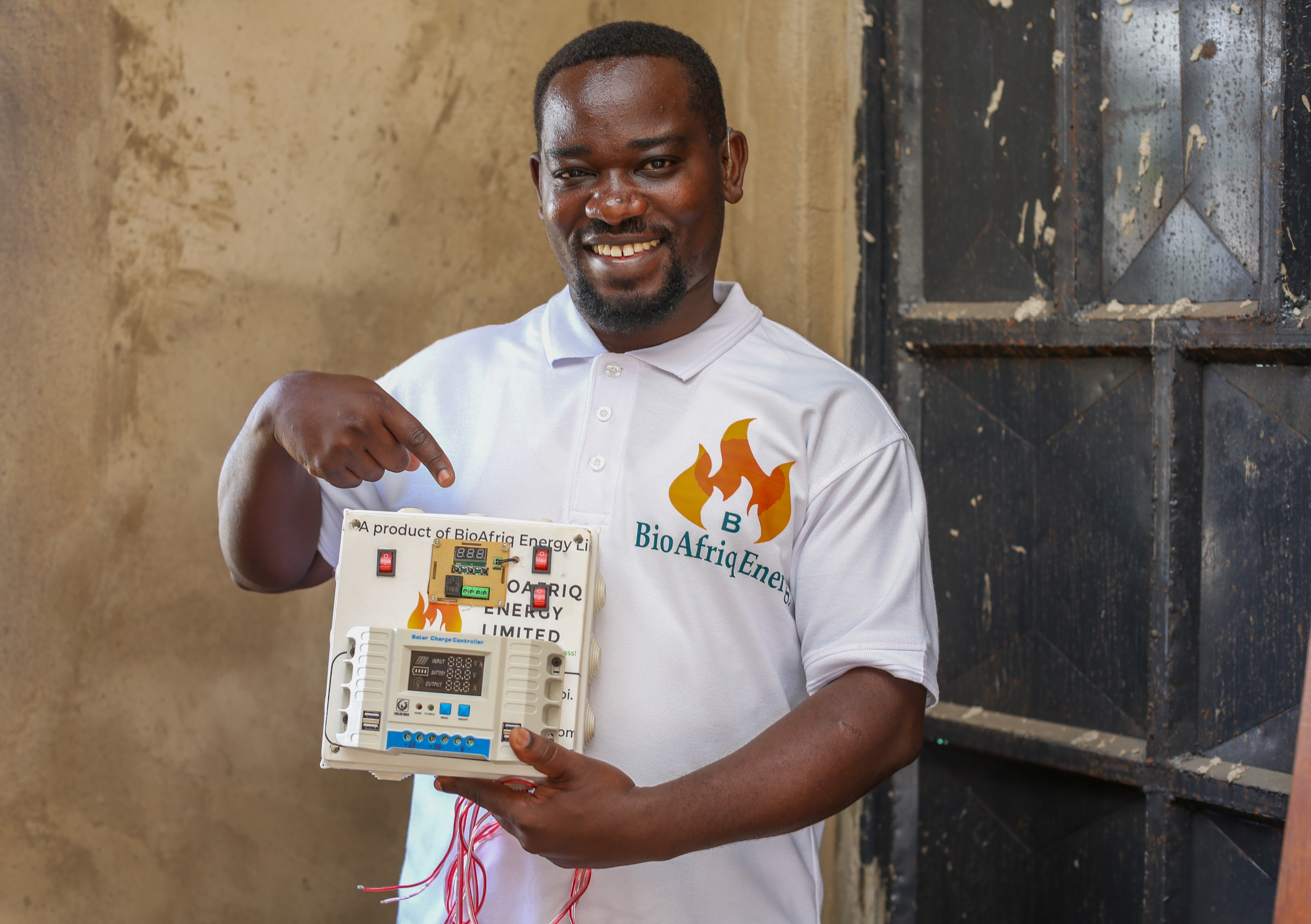
James Nyamai, holding the BioAfriq Energy Hybrid Solar Dryer.
The dried food market in Kenya is experiencing significant growth (1), with demand rising by 30% in recent years (2). Dried products are increasingly valued for their longer shelf life, reduced weight, resistance to spoilage, and ability to retain nutritional value when processed correctly. However, traditional solar drying methods are slow, unreliable during wet seasons, and prone to contamination.
Our research revealed that over 30% of dried foods are contaminated with yeast and mould, largely due to prolonged drying times. BioAfriq’s Hybrid Solar Dryers address this challenge directly, enabling complete drying in as little as 10 hours compared to up to three days using conventional methods. This means there is now very little contamination. Additionally, all products are tested both internally and by independent laboratories to ensure food safety.
As a result, farmers can now extend the shelf life of their produce by up to 12 months, opening opportunities for value addition into flours, packaged snacks, and other nutritious food products.
The Transformative Impact
I applied for the Africa Prize knowing it could help us scale. A chance encounter with fellow Kenyan innovator Esther Kimani, shortly after she was announced as the 2024 Africa Prize winner, reinforced my belief that the programme was right for us. I wanted pan-African exposure, networks beyond Kenya, a deeper understanding of regional markets and policies and, of course, the opportunity to win the £50,000 prize. What actually happened was transformative though, in ways I hadn’t imagined.
Being announced as a shortlisted innovator significantly elevated BioAfriq Energy’s profile. We gained international exposure through platforms such as BBC Africa, and strengthened our institutional reputation.
For example, the Sierra Leone Society Autistic Society had learned about my work prior to my participation in the Africa Prize and wanted to shortlist me for a trial scheme training people with autism on how to use the dryers to provide them with a job and income. Being announced as one of the 2025 Africa Prize shortlist enhanced my credibility during the due diligence process, which ultimately led me to being selected. This partnership was a breakthrough as for the first time ever, my dryers would have a presence outside of Kenya, as I was asked to export them to Sierra Leone and Uganda to participate. My goals, that the dryers would help provide people with an income, was becoming a reality in a way I had never expected.
Few months before the shortlist announcement, I was appointed to a government technical committee to advise on food drying standards and policies in Kenya. Being a part of the Africa Prize reinforced my voice and visibility within the committee. Furthermore, BioAfriq Energy obtained duty-free trade approval within the East African Community and achieved certification from the Kenya Bureau of Standards (KEBS), milestones that now allow us to export our dryers regionally with confidence.
Perhaps the most valuable outcome of the Africa Prize was the clarity it brought to our business model. Through the programme, I developed an approach that connects BioAfriq Energy’s technology with Taliana Foods, our sister company,
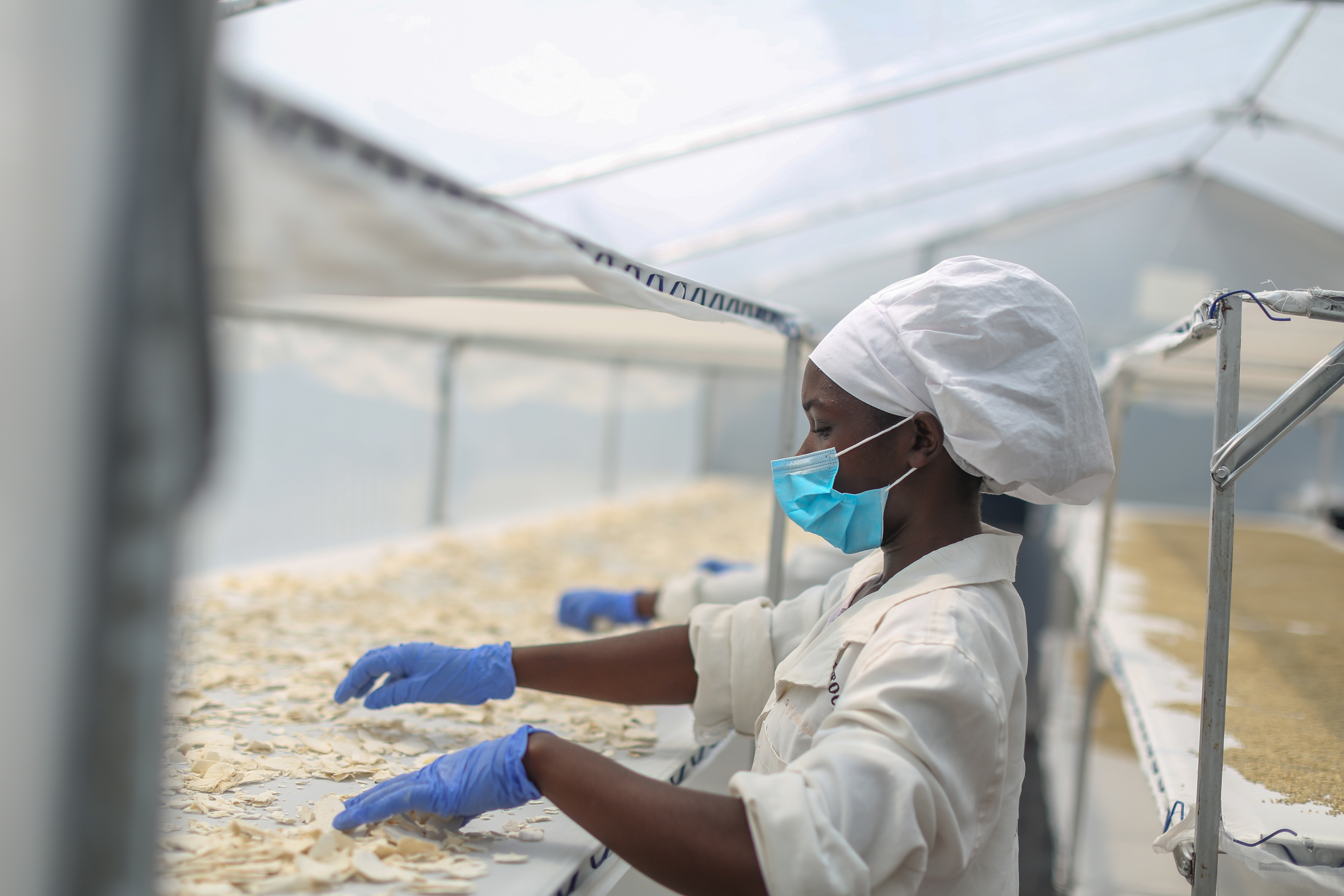
A BioAfriq Energy staff member, arranging dried foods on a table.
Together, we have established community-based dehydration hubs that are equipped with pre-processing machinery, BioAfriq’s hybrid dryers, and on-site food safety testing facilities to ensure quality and compliance.
Smallholder farmers can now bring their produce to their nearest hub to be dried, providing a direct route for the farmer to sell and get their produce to market. Taliana Foods receives a steady supply of nutritious dried foods for their products andin doing so, we close the loop: reducing post-harvest losses, guaranteeing food safety, enhancing nutrition, and creating reliable income streams for farmers.
The Africa Prize did more than support a business, it reshaped our vision, and being shortlisted was not just a milestone, it was a turning point. It helped us move from a technology provider to a systems-level solution for food security, nutrition, and climate resilience in Africa.
One innovator can change a community. A network can transform a continent. The Africa Prize for Engineering Innovation is so much more than just the chance to win money.
The Africa Prize currently provides lifetime support and mentoring to a 160-person strong network of pan-African innovators who are using technology to improve lives in their community and beyond. The Africa Prize will re-open in June 2026 – transform your impact by applying.
References
(2) https://acts-net.org/wp-content/uploads/Market-Analysis.pdf