
Frontiers symposium co-chair Dr Debashish Bhattacharjee FREng reflects on the recent Frontiers event in Bangkok, Thailand, where practical solutions and systems changes were shown to be shifting markets
When I first trained as a metallurgist, “circularity” was not in our vocabulary. We spoke of alloy strength, corrosion rates, and process efficiency. We optimised inputs and outputs, but we rarely asked: what happens when the product fails, or the system around it changes? That question is now unavoidable.
Standing amongst those who gathered in Bangkok for a symposium on the business case for a circular economy this August, what really stuck with me was the clarity of purpose: people from across disciplines and geographies coming together not to compete, but to connect. Engineers, entrepreneurs, researchers, city officials – all working on different parts of the same puzzle: how to make systems more circular, more inclusive, and more viable.
We saw, for example, a furniture company building circularity into its core business model, not as CSR, but as strategy. We met people turning discarded electronics into livelihoods, into high-value products, and food waste into certified compost.
But what stayed with me most were the voices pushing us to look beyond models and metrics. The waste pickers in Pune, the women running micro-aggregators in Nairobi, the informal cooperatives across Southeast Asia; these are not passive beneficiaries. They are the infrastructure of circularity. If we don't design alongside them, we are not designing for the real world.
This isn’t easy work. There is no single solution , but I left the symposium with something deeper than optimism: conviction. Conviction that systems can change, because here we were, working, talking and exchanging ideas with the people who are changing them; that markets can shift, because we saw buyers already responding to traceability, quality and design; and that engineers must lead – because only we can make complexity deliver at scale.
Making the business case
We went to Bangkok with a simple question: what does it take to make the circular economy make business sense - not in 2035, but right now?
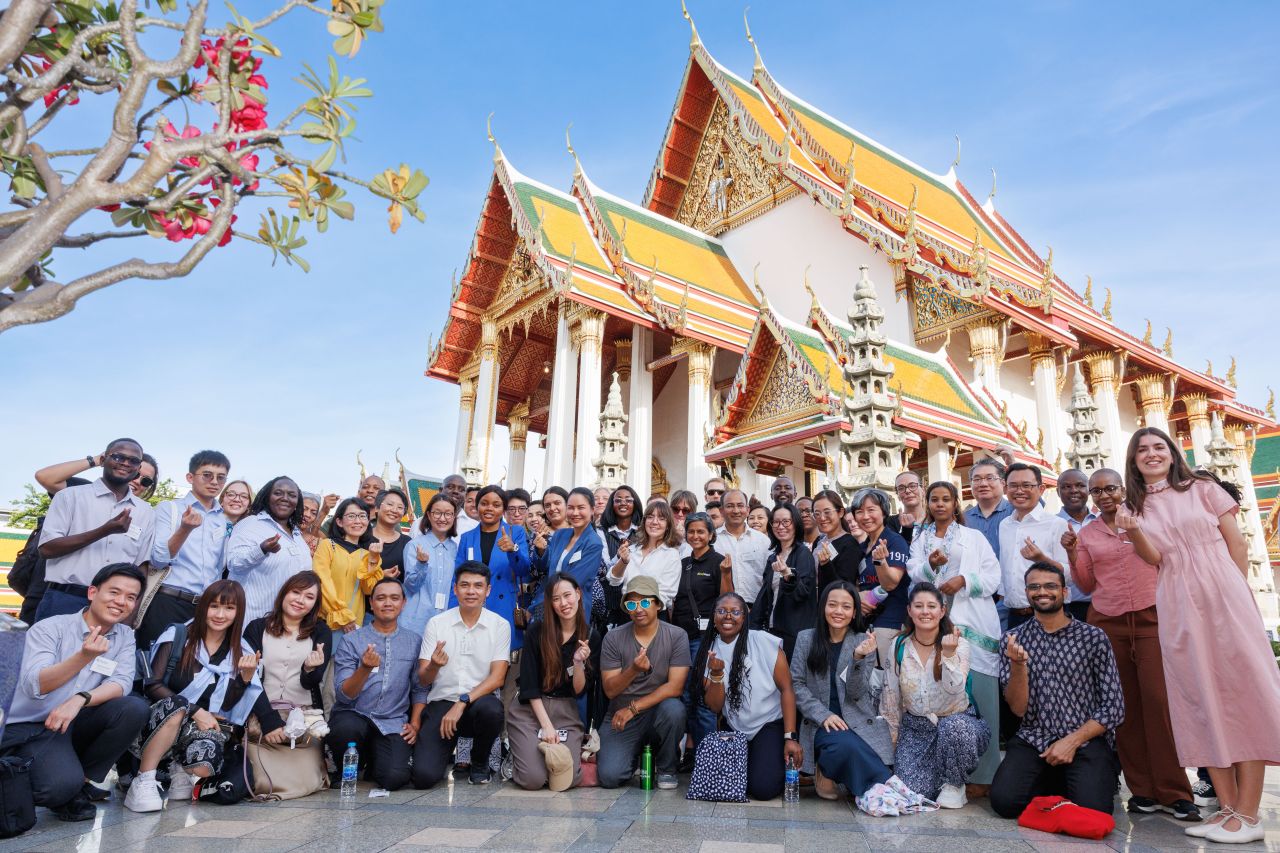
Over three packed days, 64 researchers, practitioners and innovators from 20+ countries came together to swap ideas, stress-test hard problems, and build collaborations that will keep moving after the conference badges came off. Co-hosted with Thailand’s Program Management Unit for Competitiveness (PMUC) and chaired by myself and Dr Jintawat Chaichanawong, the programme mixed incisive keynotes, hands-on sessions and a city visit that brought policy off the page and on to the streets.
So, what did we learn? If there was one message that echoed through the room, it was this: circular models compete on value. We heard of examples from Thailand to Malawi showing how, as one speaker put it, “Circularity isn’t the end of growth, it’s a smarter way to get there.”

Dr Debashish Bhattacharjee FREng
We heard evidence of how inclusion is integral, with waste pickers and women-led enterprises keeping things moving. As Lakshmi Narayanan, Session Co-chair, summed it up, “Recycling without waste pickers is garbage.”
And we talked about how concepts like extended producer responsibility (EPR) blended finance that sequences early grants with public support and private capital, and policy sandboxes that let cities and firms test new models without waiting five years for a reform to land, provide the financial and regulatory environment the circular economy requires to take off.
You can read more in the symposium report, for a summary of conversations and takeaways from the event.
The next step
The mood in Bangkok was pragmatic and hopeful, rooted in what’s already working from Padang to Pune, Blantyre to Bangkok. City leaders made the case for moving early and taking people on that journey. Bangkok’s own push - pairing real-time citizen reporting with separation rules, smarter collection and trust-building (“what you separate, we keep separate”) was a masterclass in turning policy into behaviour change. Or, as Pornphrom Vikitsreth, Advisor to Governor of Bangkok and Chief Sustainability Officer of Bangkok, warned: “Waste problems grow faster than the solutions if we hesitate.” The takeaway: speed is a strategy; trust, data and collaboration are how you achieve it.
Thank you to partners at PMUC, to the session co-chairs who met big ideas with grounded detail, and to every participant who shared, questioned and co-created.
To all those who joined us: thank you. You are all building the next iterations of this work, striving for solutions that are elegant and innovative, building durable partnerships, and outcomes that can be measured not just in tonnes of CO₂ or waste, but in trust, dignity and shared progress. Several exciting projects have already secured seed funding and are now moving forward with real momentum.
I left Bangkok with new questions, as well as directions to new answers and solutions. I hope you did too. That’s the best sign a symposium has done its job.
Our heartfelt thanks to all who contributed to this Frontiers Symposium. For a full summary of this Frontiers symposium, please view the event report and explore the seed funding projects that emerged from the event.