
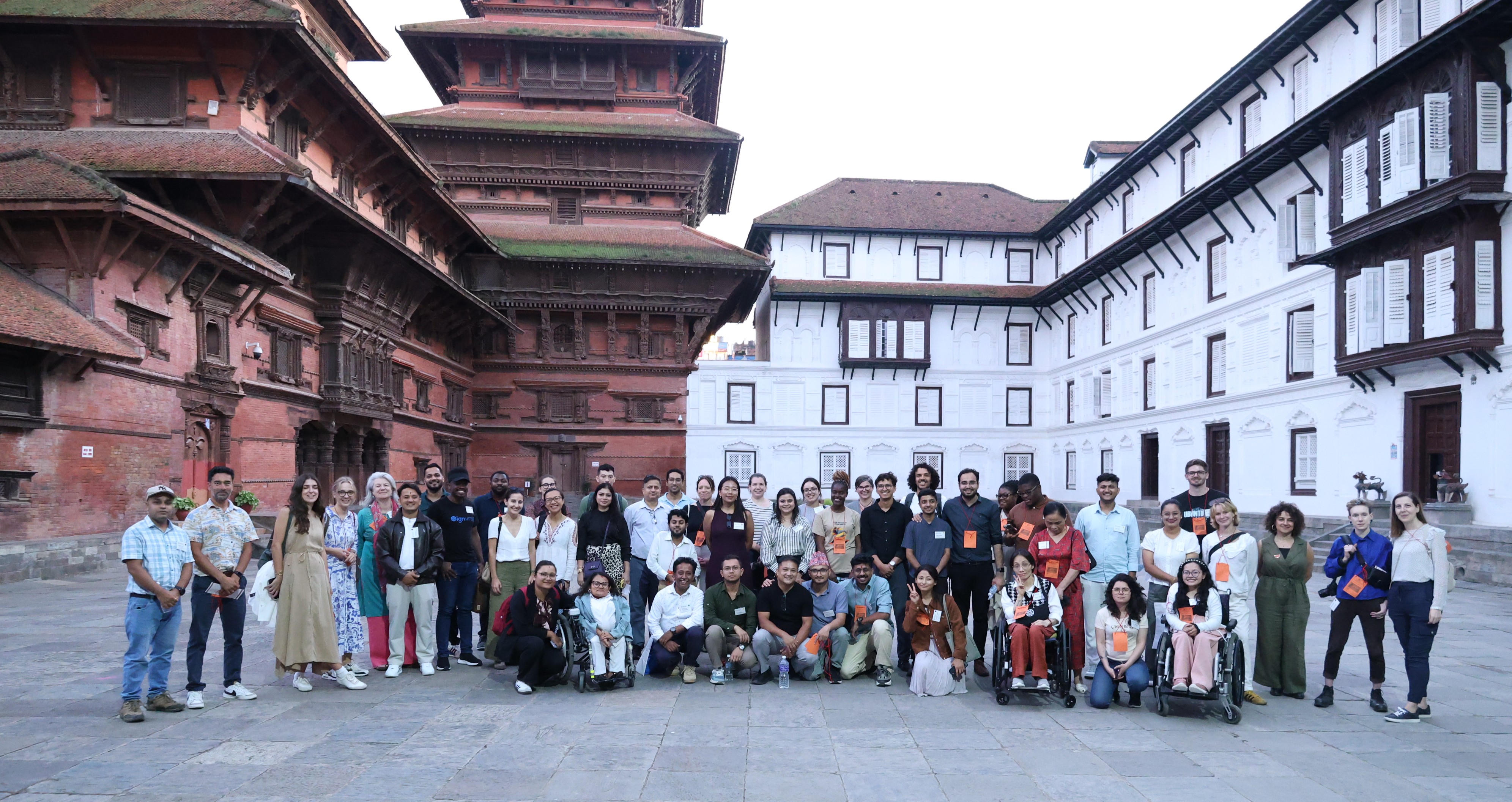
Group photo of Frontiers delegates in Nepal
In October 2025, we proudly co-chaired the AT2030 Frontiers Symposium, Inclusive Innovation in Action: Community-led Assistive Technology Solutions in Local Context, held in Kathmandu. The event was a collaboration between the Royal Academy of Engineering and UCL Global Disability Innovation (GDI) Hub’s AT2030 Programme. AT2030 is funded by UK International Development.
The gathering brought together engineers, therapists, doctors, policymakers, entrepreneurs, community leaders, and people with disabilities to explore how Nepal and countries with limited resources can harness inclusive innovation to strengthen access to assistive technology (AT). More than 60 participants from diverse backgrounds joined us to examine the opportunities, constraints, and creative pathways that lie between global expertise and local ingenuity. As co-chairs, we found the discussions deeply energising. Participants engaged with honesty, humility, and a shared readiness to collaborate. Across all sessions, the same message shone through: innovation is most powerful when it is shared, inclusive, and co-created.
We are delighted to share the full insights, commitments, and emerging ideas from the event - you can access the event report now. The theme Bridging Global and Local Innovation captured the spirit of the event: a call for a middle path where global collaboration is grounded in local creativity.
From adversity to advocacy
In Nepal, where resilience is part of everyday life, innovation often grows from necessity. Yet the country faces a paradox familiar to many low- and middle-income nations: imported assistive technologies are high-quality but prohibitively expensive, while locally designed devices are affordable and relevant but lack recognition and investment.
Among the many powerful voices was Dr Raju Dhakal, Nepal’s first specialist in Physical Medicine and Rehabilitation. Living with paralysis since childhood, his personal experience shaped his determination to reform how disability is understood and addressed. Dr Dhakal has devoted his career to systemic reform, training healthcare professionals, raising public awareness, and integrating rehabilitation into education.
“Innovation begins with education, teaching and learning at the school level,” he noted, emphasising that awareness and inclusion are the foundations of lasting change. His journey became a metaphor for the symposium itself: technology should not aim only to fix impairments, but empower people to reshape their environments and fully participate in society.
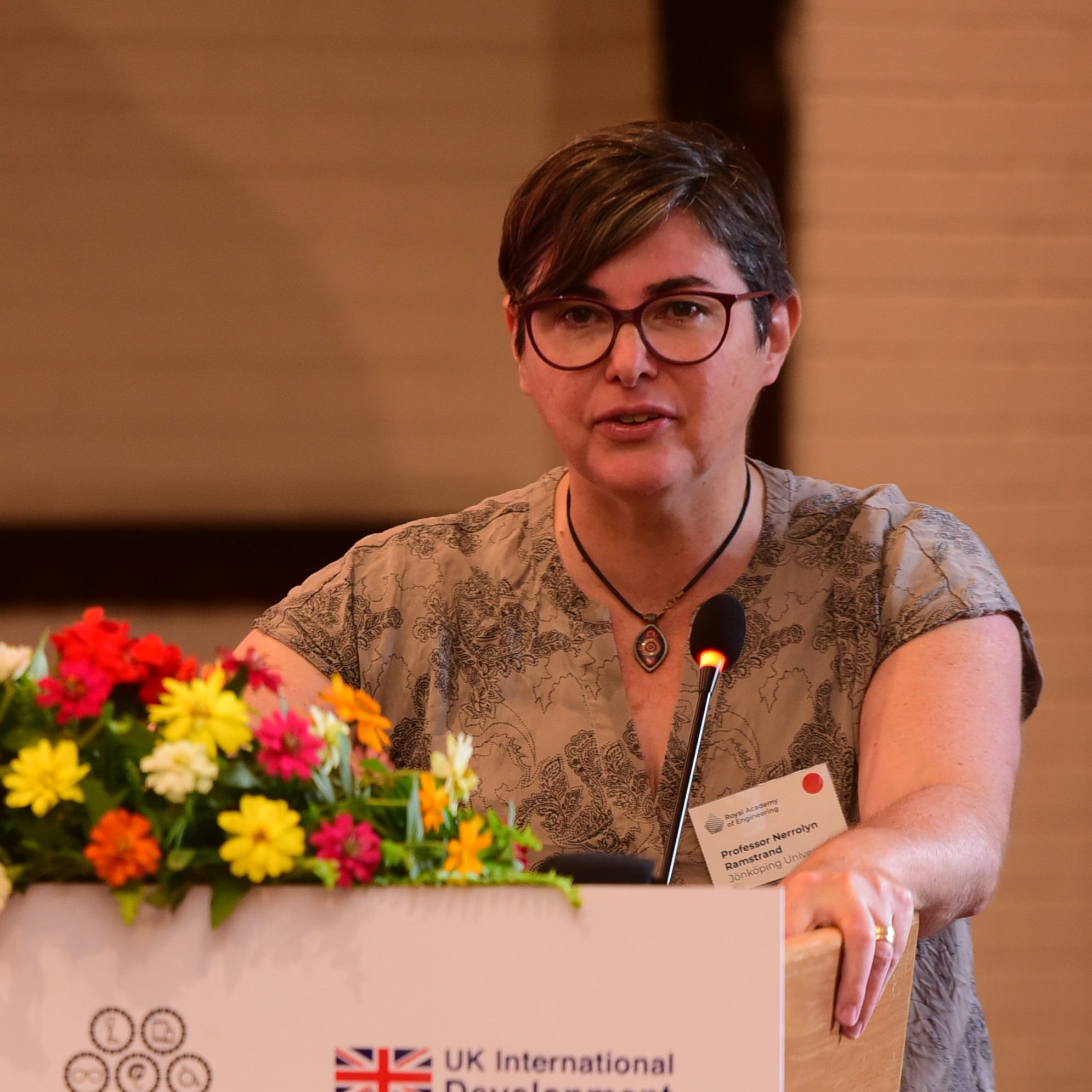
Professor Nerrolyn Ramstrand
Building community through innovation
If adversity ignites awareness, community sustains it. The symposium’s first session explored how global expertise and local ingenuity can work together to make AT more sustainable, equitable, and accessible.
Dr Ben Oldfrey, Dr Pratishit Lal Shrestha, and Andrew Lamb offered complementary perspectives. Dr Oldfrey noted that while globalisation has made devices cheaper, it often overlooks unique, small-scale human needs such as a growing child’s prosthetic limb that must be replaced every year. Local production, he argued, offers flexibility, repairability, and cultural appropriateness. His examples, from Norwegian refurbishment programmes to Nepali 3D-printed sockets, demonstrated that sustainable AT can thrive anywhere.
Lamb reframed the discussion entirely: “Design is no longer the bottleneck, distribution is.” With Nepal now home to hundreds of 3D printers, he urged participants to “scale out, not up,” investing in community-based maker spaces that democratise innovation.
Grounding these ideas in Nepal’s reality, Dr Shrestha described a system still dependent on imports and limited by a shortage of trained technicians. Yet he also shared how these constraints have sparked creativity: Nepali engineers are now producing paediatric knee joints and prosthetics using locally available materials. “Dignity and independence,” he said, “must replace charity and dependency.”
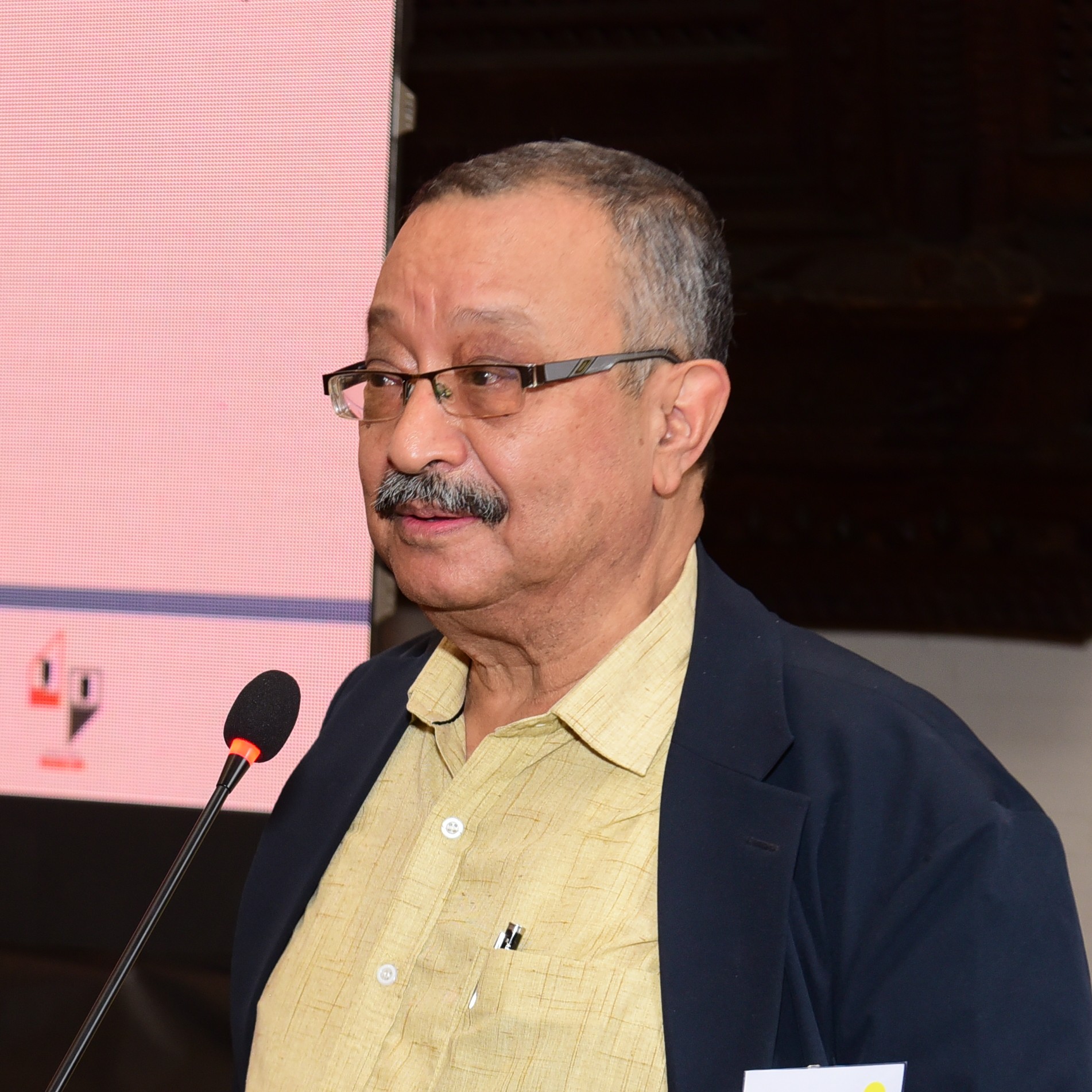
Professor Pramod Shrestha
Turning innovation into integration
For many, the challenge is not just to invent devices but to integrate them into systems, policies, and everyday lives.
From Ireland, Dr Rosie Gowran shared how even well-resourced countries struggle when AT systems are fragmented. Her “Sustainable Community of Practice” model stressed that policy, provision, and people must align for true inclusion.
From Nepal, Nistha Shrestha presented a sobering statistic: only 27.7% of Nepalis who need AT currently have access to them. The rest face barriers of cost, geography, and awareness compounded by limited human capacity, with just eight prosthetists and eight occupational therapists nationwide. Her call to action included linking AT with Nepal’s Health Management Information System (HMIS), decentralising services, and building professional training pipelines.
For Anjana KC, who has brittle bone disease, the discussion was deeply personal. She spoke about the intersecting barriers faced by women with disabilities, from social stigma to physical inaccessibility. “AT is not charity; it’s a bridge to dignity,” she said.
From prosthetics to participation
Nepali innovators are already redefining what accessibility means. Amit Ratna Bajracharya and his team, for example, replaced imported prosthetic valves costing $50 with aquarium valves priced at just nine cents without compromising quality. His motto, “innovation through necessity,” captured Nepal’s spirit of resourceful resilience.
Occupational therapist Ganga Gurung, founder of Bloom Park Store, brought this spirit into daily life. Her enterprise merges imported precision with locally crafted adaptive tools, including weighted vests, sensory kits, and communication boards, ensuring affordability and cultural relevance. “Assistive technology is not just a device,” she said. “It’s empathy turned into action.”
This message carried through the final presentation, led by Tania Gonzalez Veiga, who presented Accessible Digital Textbooks (ADT), AI-designed materials that are inherently accessible, not adapted later. With integrated audio, sign language, and image descriptions, ADTs have already reached more than two million children globally. Nepal, she added, is well placed to join this movement toward inclusive education.
From talk to transformation
The symposium concluded not with closing remarks but with commitments: to develop a national AT strategy, establish innovation hubs, and promote open-source collaboration across sectors. Participants agreed that inclusion will depend on co-creation, policy alignment, and long-term investment in people.
Yet the most powerful message was not technical, it was human. The stories shared across disciplines revealed that innovation is not about gadgets, but about dignity, agency, and belonging.
To support these commitments, we are excited to announce that ten outstanding collaborative teams have received seed funding, fuelling new research, local fabrication pilots, community-centred services, and inclusive education tools. See the projects.
Closing reflections: Innovation belongs to everyone
As co-chairs, we left the symposium deeply inspired by the courage embedded in lived experiences, the ingenuity of local innovators, and the willingness of participants to think and work across disciplines, sectors, and borders. The conversations reaffirmed a truth we both hold closely:
Assistive technology is not about devices; it is about dignity, agency, and belonging.
When knowledge is shared openly, when learning is continuous, and when innovation is co-created with communities, transformation becomes not just possible, but inevitable.
We extend our heartfelt thanks to every participant for their honesty, enthusiasm, and commitment throughout the event. Your reflections, challenges, and ideas have already begun shaping new pathways forward.
The journey does not end here. We look forward to seeing how these insights evolve into concrete action locally rooted, community-led, and globally informed.