|
Education
The Academy’s activities in
education and training tackle the strategic
challenge of creating a system of engineering
education and training that satisfies the
aspirations of young people while delivering the
high calibre engineers and technicians that
businesses need.
The Academy works with
partners to ensure that more young people study
science, technology, engineering and mathematics
(STEM) subjects in schools, FE colleges and
universities, where we enrich outcomes by bringing
real-world engineering practice into the student
experience. The Academy is working to encourage more
people, especially young women and people from a
wider range of backgrounds, to work as engineering
technicians, graduate engineers and engineering
researchers.
The Academy’s education
activities are organised into four strands:
education schemes for professional development, 5-19
education, FE & HE and education policy.
Professional Formation Schemes
In higher education the
Academy concerns itself with enhancing the skills
pipeline into industry by ensuring that engineers
graduate with the skills that are required for
economic recovery and growth. Our flagship programme
– the Visiting Professors scheme – is a recognised
exemplar of effective practice of experience-led
engineering education where leading practitioners
enrich the engineering education with the latest
industrial technology and practices. This scheme is
very much focussed on problem-based learning
pedagogy. The focus is currently on a Visiting
Professor scheme in Innovation, which supports the
development of an innovation-driven economy for the
UK. Support is maintained for other Visiting
Professor schemes in engineering design, sustainable
development, systems engineering and building
engineering physics. Our 200+ Visiting Professors
currently in post each reach some 100 to 150
students per year.
The Academy has also committed to
enhancing the formal engineering education that
students receive at university by enabling them to
undertake extra-curricula personal development
activities through its Engineering Leadership Awards
and Advanced Awards. Every year these highly sought
after awards are supporting around 40 undergraduates
with Advanced Awards and a further 300 with Standard
Awards. Award holders frequently go on to attend the
Executive Engineers Programme of development
training which has run every year since 2000.
A number of high technology industries require
specialist skills that are only available through
the study of a Masters degree. The Academy has made
a major investment in funding the study of
specialist second degree courses aligned to two of
these industries: energy supply and environmental
technology. Two schemes: the Panasonic Trust
Fellowships and Petrofac Fellowships for the
Enhanced Graduate Engineer support some of the most
competent and highly driven graduate engineers.
Competition is intense with more than 200 applicants
chasing the 12 awards supported by these schemes
each year.
In addition to supporting the UK’s
technical skills base, the Academy is involved in
developing the industrial leaders who will drive
these industries forward to achieve their full
wealth creating potential. The Sainsbury Management
Fellowship scheme plays a significant role in
helping to develop the next generation of industrial
leaders. The scheme’s alumni, the Sainsbury
Management Fellows, count a number of chief
executives, company directors and company owners
amongst its membership. These individuals also
support the Academy through participation in
selection activities and as mentors to undergraduate
students in receipt of Engineering Leadership
Advanced Awards.
The Academy is also concerned with
promoting full career development and the continued
employability of engineers once they have entered
industry through a number of privately funded
programmes and the Engineering Professional
Development Awards. Such initiatives very often
involve the award of small value grants which more
often than not help lever larger sums from employers
and others.
5-19 education
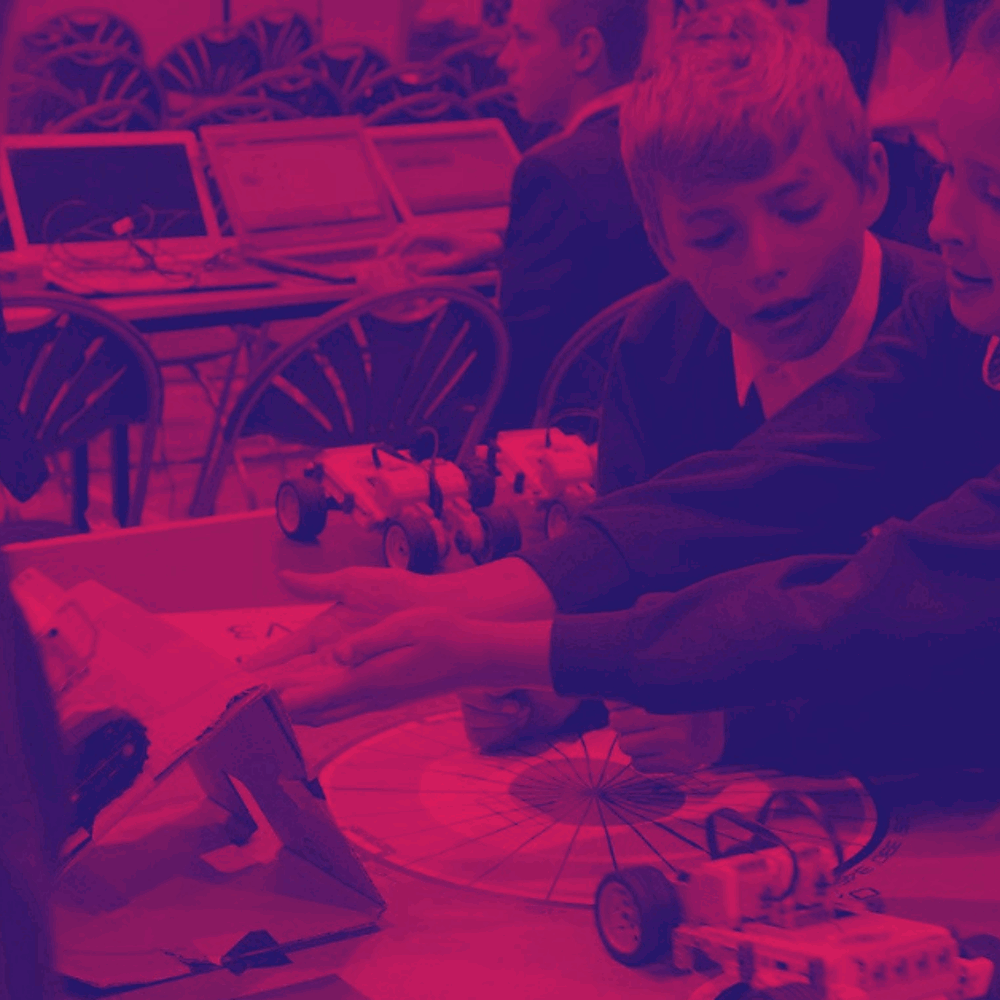
Tomorrow’s Engineers is
the Academy’s partnership with Engineering UK and
the Lloyds Register Educational Trust which engages
school pupils with hands-on engineering activities.
In the last year, this partnership has funded more
than 30,000 young people to engage with activities
provides by Young Engineers, the Smallpeice Trust,
The Engineering Development Trust (incorporating the
Industrial Trust) and Primary Engineer.
Through
funding provided by BAE Systems and the BG Group,
the Academy is also working with teachers and pupils
at more than 100 schools. This augments the STEPS at
Work Programme which has provided one-day industrial
placements for 1,300 teachers per year since 2005.
FE & HE
The Academy leads the engineering component
of the HEFCE & HEFCW funded National HE STEM
project. Three funding rounds for engineering
activities in curriculum innovation, outreach,
widening participation and diversity and educational
research have resulted in more than 60 proijects
funded in Higher Education Institutions in England
and Wales. Two thirds of all projects involve
employer input. The Academy has been actively
supporting the broader HESTEM programme,
contributing to delivery strategies and initiatives
and activities led by the regional STEM partners.
The Engineering Further Education (EFE) project,
which is funded by BP plc and supports teaching and
learning in further education colleges. A new
e-mentoring programme has been developed which sees
engineering students supported by practicing
engineers from industry. Contextualised maths
resources to support teaching and learning at Level
3 have been developed to date and these are
currently being trialled before being disseminated
to the network of EFE colleges. A new CPD model has
been developed. CPD for Practitioners by
Practitioners will see a practitioner/teacher from a
college being linked up with an engineer from local
industry to deliver industrially relevant CPD within
regional colleges. The project is currently working
with 11 colleges nationally.
In addition, the
teaching of engineering qualifications in the
Further Education sector is being enhanced by
Engineering lecturer CPD activity funded by the
Learning and Skills Improvement Service (LSIS).
Education policy
The Academy’s work on education
policy is augmented by E4E (Education for
Engineering) which is our education partnership with
the 36 professional engineering institutions. Over
the past year E4E has had a particular focus on the
Further Education sector. E4E members have worked
with the Academy on the FE STEM data research. This
has enabled unique input to Government consultations
on future FE strategy and funding and the Wolf
review of vocational education for the Department
for Education. Currently, E4E is providing input to
the National Curriculum review.
E4E continues to
develop policy positions and press Government for
action on key priorities to ensure an adequate
supply of future technicians and engineers. These
include improving the status of technicians, better
careers education and guidance for young people,
more specialist teachers - particularly in physics
and mathematics, more subject CPD for STEM teachers
and increasing the diversity of those who study STEM
in post-16 education, in particular women, who make
up less than 10% of the UK engineering workforce.
|